Walking from Weald to Waves: A Journey Through England’s First Nature Corridor
I’d worked for the Weald to Waves team as a volunteer legal adviser for a few months before I decided to explore the route of our nascent nature corridor. I expected a good walk. But what I found was something more profound: a thread of landscape that, when followed on foot, told a story of geological time, of social history, of human endeavour, of ecological loss, and of tantalising possibilities for restoration and renewal.
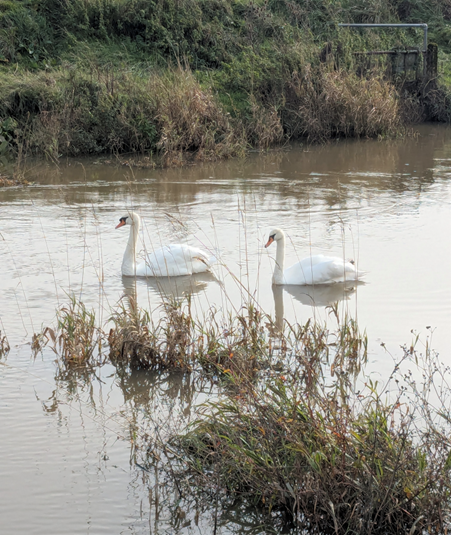
The idea of a “corridor” can sound abstract: a line on a map, or a concept in a strategy document. But on the ground, the corridor is anything but. It’s a fast-flowing river, it’s hedgerows loaded with autumn berries, and it’s quiet lanes humming with pollinators.
Walking the route made the Weald to Waves vision real.
Beginning at the Edge of the Sea
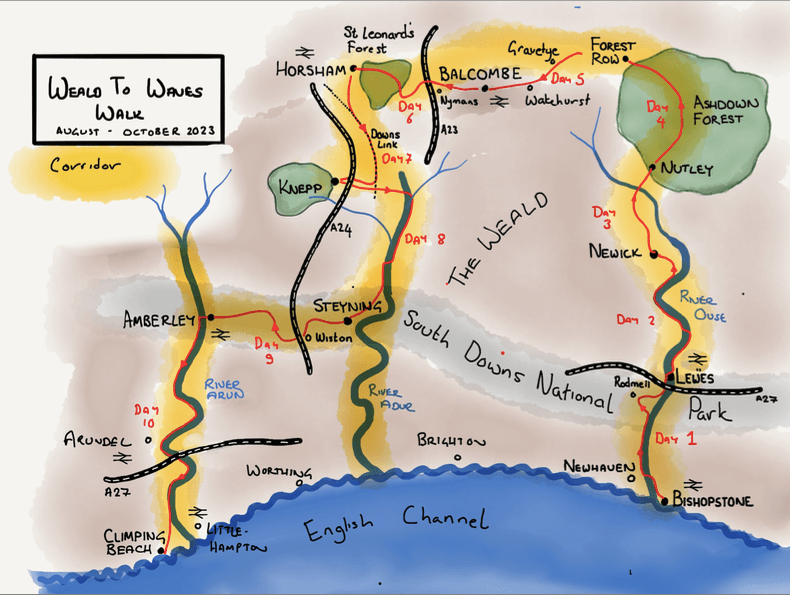
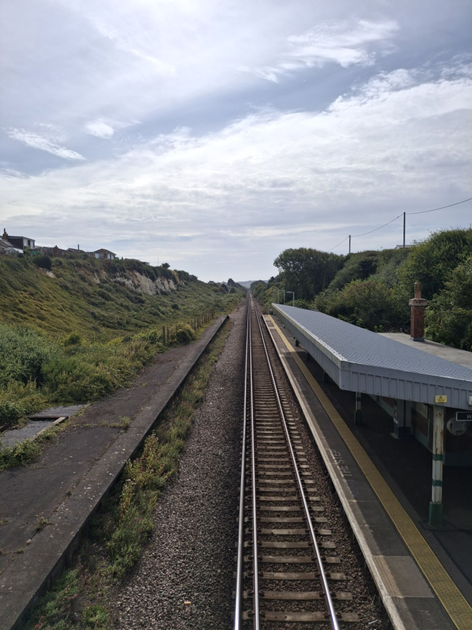
My journey began at Bishopstone station, just along from Newhaven at the mouth of the Ouse. Ahead lay ten days of walking through one of England’s most varied and historic counties.
Long before I set out, I had studied the proposed route on the Weald to Waves website, colouring the corridor’s line in fluorescent green marker, and the network of rights of way in blue, on my Ordnance Survey maps.
From that, I knew that parts of the walk would be in the core corridor: along river embankments and the South Downs ridge. Sometimes I walked in the “radiant zone”: the two‑kilometre band that both shapes and is shaped by the core corridor’s ecological health. But there are also spots where I had to strike across fields with a river to my back, and other places where there were simply no rights of way and where I had to detour away from the corridor entirely.
A Landscape with Stories in Its Soil
Heading inland from Bishopstone, the first three days took me up the Ouse and into its headwaters. Rivers are the corridor’s living spine: their floodplains, wetlands, and adjoining farmland offer some of the most promising opportunities for restoring habitat at scale.
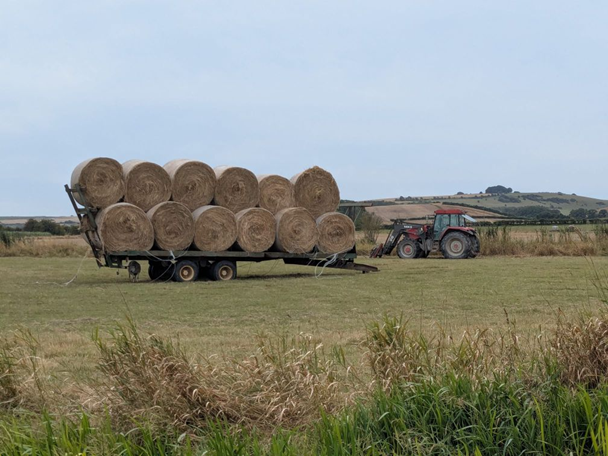
It soon became clear that corridor is not a wilderness project imposed on the landscape, for this is principally a farmed landscape, and the corridor will thrive only to the extent our land managers embrace organic and regenerative farming or set land aside for nature restoration alongside conventional agriculture.
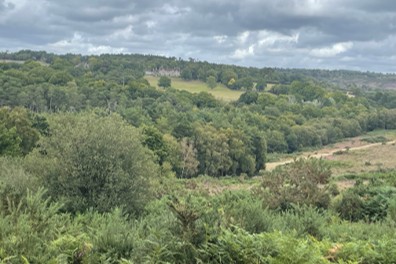
After Fletching the ground begins to rise as I reached the ancient and beautiful Ashdown Forest, lowland heath, a landscape forged in the tensions between Norman rulers who wanted to hunt deer, and the locals who kept on putting their pigs and cattle out, embracing the Sussex motto ‘We Wunt Be Druv’, and creating a grazed landscape rich in insects and birds.
Why Walking Matters
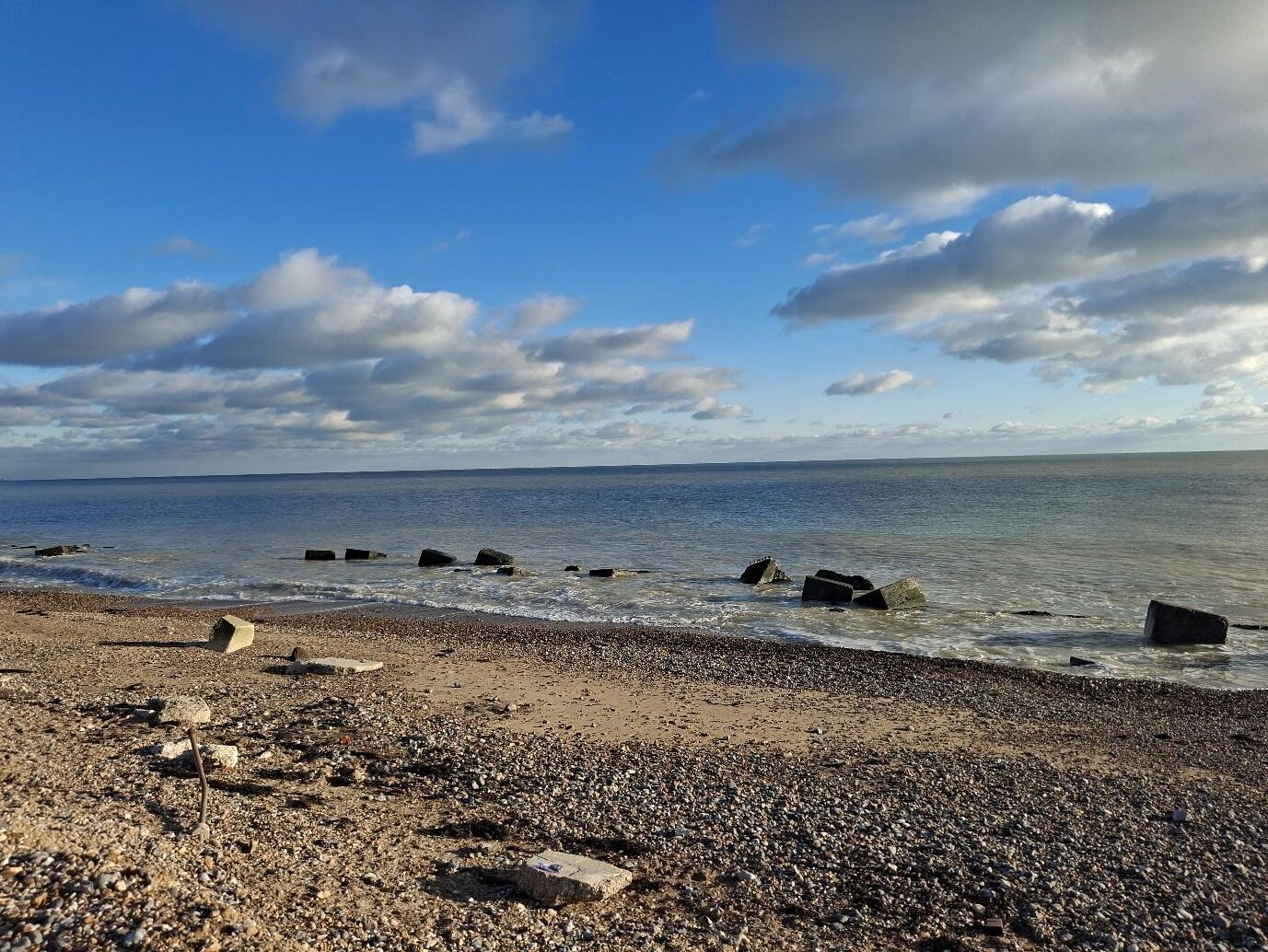
Modern life gives us little time to walk with purpose but without urgency. On foot, I found myself seeing things differently: the potential for disused railway lines to enable wildlife to commute, and the devastating disconnection created by the development of our busiest transport corridors from mud churned cart tracks to dual carriageways. And I also began to understand the threats to our landscape from climate change, wading waist-deep through the muddy waters of the Arun at high tide during a flood-ridden November, and seeing the shingle washed across the crop fields after the sea broke through at Climping beach.
And walking the corridor allowed me to understand not only what is there, but what could be there. I saw weirs which inhibit fish migration, gaps in hedges which stop dormice in their tracks and woodland floors bare of understorey thanks to burgeoning deer populations. These are the challenges Weald to Waves is hoping to overcome to bring nature back.
As I walked in headwaters along rivers, I imagined seeing beaver dams holding back the flow. At Ashdown I imagined pine martens scampering through the branches. In the Arun valley I conjured up the sound of the curlew. And at the coast I pictured shoals of mackerel in the ancient underwater forests, attracting bass and sea bream in to feed.
A Corridor of Hope
Along the route I saw people coming together. From a tiny community garden in Newhaven, through to projects like the Railway Lands in Lewes, Wilder Ouse and Chesworth Farm near Horsham, all over Sussex there are like-minded people who are working to restore nature. If we connect all of them, we will have achieved something remarkable and set the scene for nature’s return to accelerate.
Why Now Is the Moment
When I finished my walk, I wanted to create a website so others could follow the same journey. Those web-pages have now been migrated onto the Weald to Waves website. But in researching the route I realised there was so much more to say, and I resolved to write a book so I could tell the stories of this landscape and the hope I felt as I completed my journey.
So, if you’ve ever wondered what the Weald to Waves corridor looks like I’d encourage you to spend a day walking a part of it. Follow the written directions on the website or download the Alltrails route. Notice our beautiful nature, allow yourself to connect to it, and join me in dreaming about what the future could look like.
Because the more time you spend in this landscape, the more you see what’s at stake — and what’s possible.
A Call to Walk
I hope our website inspires you to lace up your boots, find a river or ridge or village you’ve never visited, and go and see for yourself what a nature corridor feels like underfoot.
My walk changed how I see Sussex. And I suspect it might do the same for you.
Ian Rogers’ book ‘Reconnection: A Walk from Weald to Waves’ will be published in Spring 2027.
Explore the Walk the Corridor web page here.