
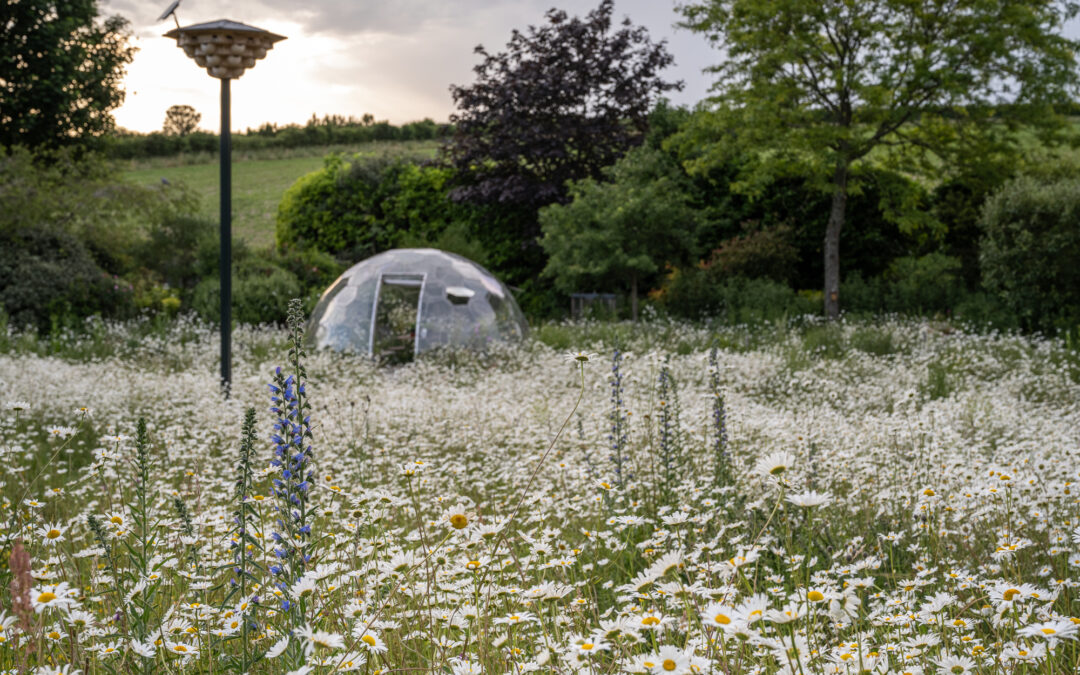
Playing the grazers: a wilder way to garden
Introduction
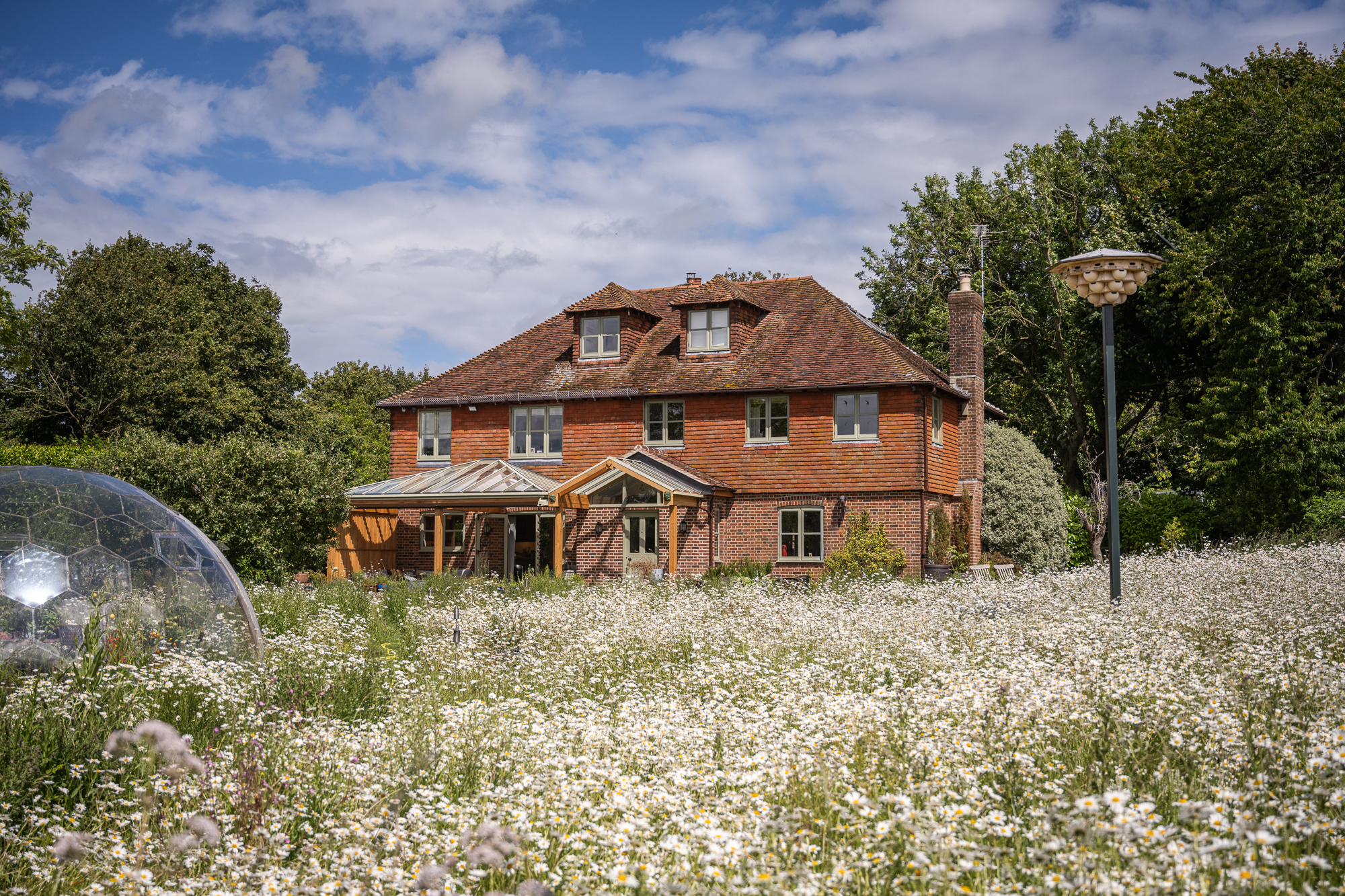
When we moved here twelve years ago, the place was a little too ‘well-managed’! We inherited a field that was regularly mown, a large lawn, and modest borders with some trees and shrubs. It seemed there was little here of value to wildlife, and hardly any flowers growing. One thing that caught our eye was a recently planted native hedge around the field, which gave us a good starting point.
Getting Started
While a lot of the initial work was trial and error, these simple key processes and guiding principles were useful to stick to:
-
- Taking a gradual and more tolerant approach, rather than aiming for a quick fix ‘finished’ makeover
- Avoiding chemicals and treading carefully
- Minimising disturbance of plants and soil
- Wildlife sensitive management including using fewer machines
- Thinking of the insects first (and not just the pollinators!)
Taking Action
We have been greatly inspired by Knepp and the principles behind rewilding over the years. We have tried to mimic the effects of grazing animals (since we don’t want to take them on ourselves!) In our own ways we graze, trample, poach, tear and cut down vegetation in our own garden spaces, almost becoming hybrid animals combining traits of cattle, goats and sheep, with a reasonable amount of ‘human’ consideration thrown in!
Over time our actions have reshaped the plot into a richer mosaic of habitats. Some areas are left relatively unmanaged, others are scythed, mown, strimmed or pruned with the lifecycles of insects hugely in mind.
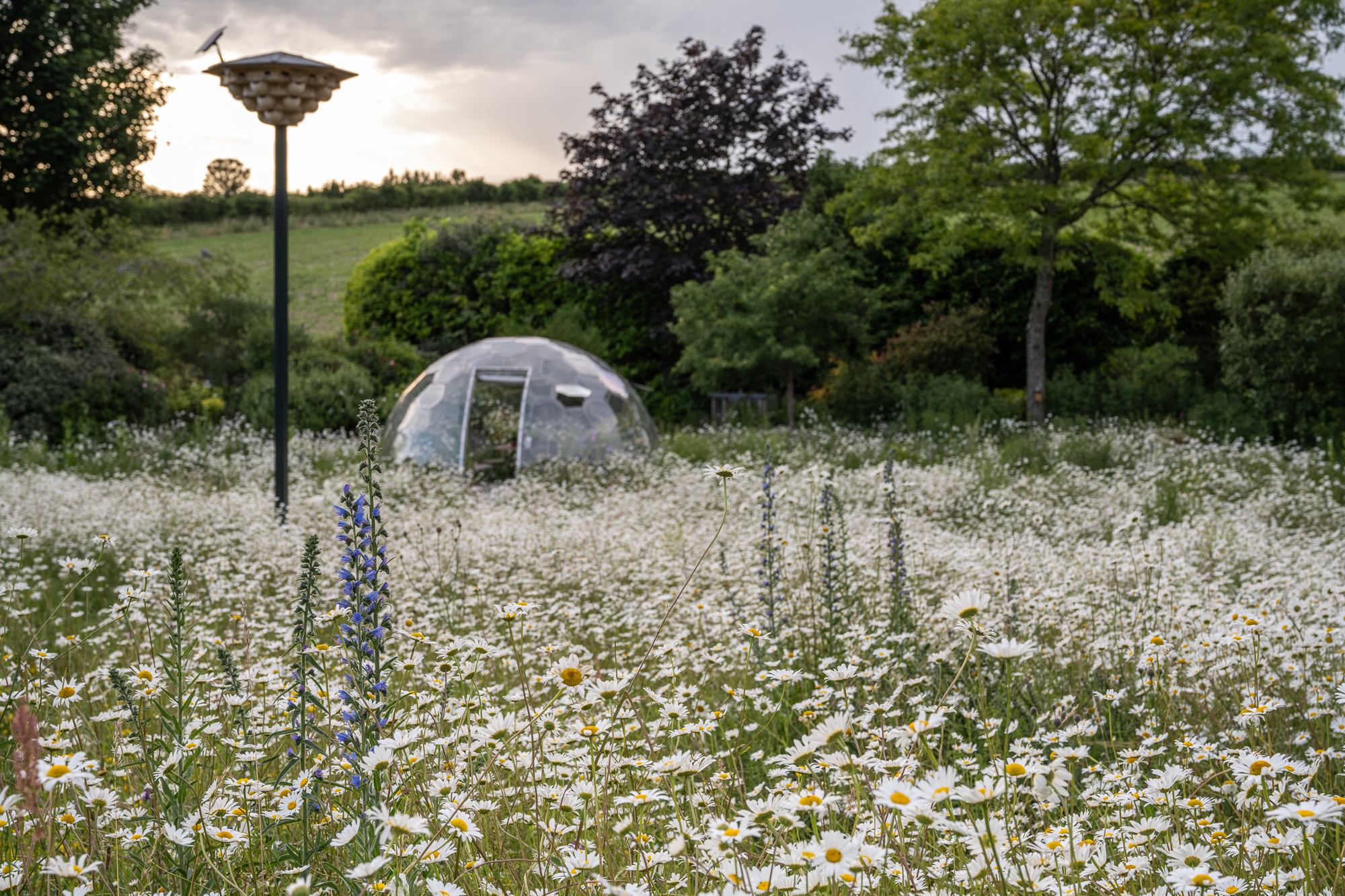
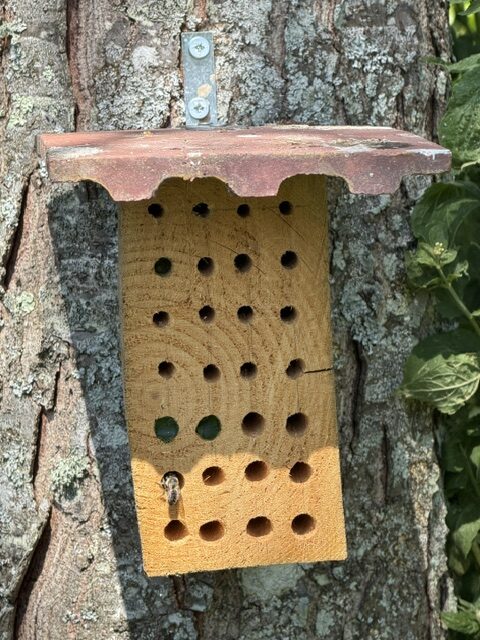
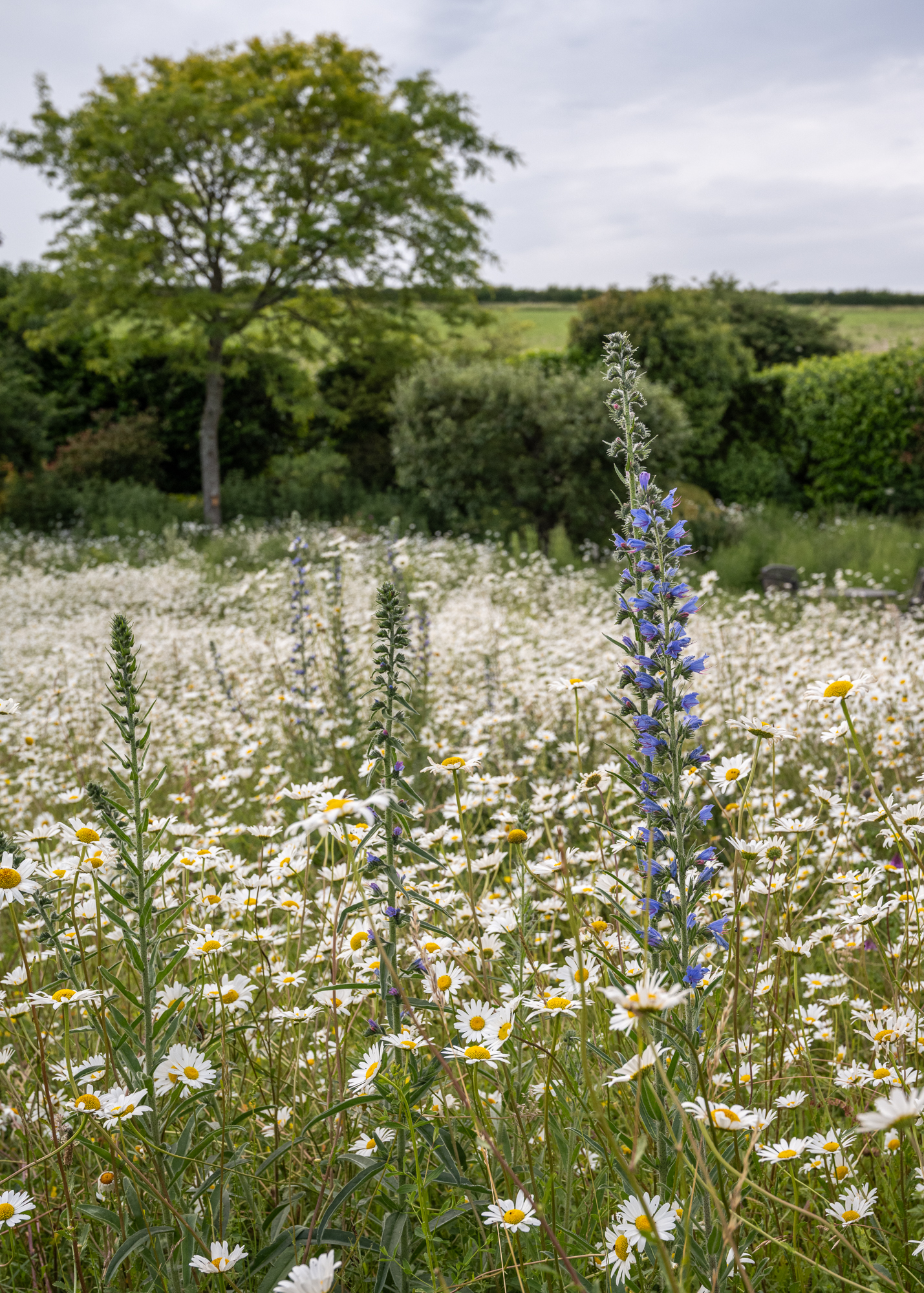
The garden now has bigger borders, thicker and taller hedges, dead-hedge frameworks using our own cut branches, a tussocky wildflower grassland, fruit trees and bramble patches and, most vital of all, a new pond. We’ve also introduced new features like big and small bird boxes, an integrated hirundine and bat tower, insect and bird watering stations and a green-roofed garage.
Some challenges along the way...
The site’s location was initially difficult to get to grips with; we sit in an isolated valley between arable land and sheep grazing, on a north-west facing slope of chalky, flinty clay. But over time we have learnt to manage the site and bring out its best features.
Pheasants, pigeons and rabbits remain a persistent pressure. As do pernicious weeds, encroaching sedge and the unhelpful nature of the soil.
The garden and field now look very different from 2013, so public perception is an ongoing challenge; passers-by may feel it looks worse than when we moved in!
People may not appreciate that we leave our garden meadow uncut and full of brown stalks, but this is actually a sign of nurturing!
And the rewards?
The rewards have been more than we could have imagined and well worth the wait! More raptors than ever now pass over the plot: kestrels, kites, buzzards, and sparrowhawks, and even little owls are breeding in the roof! Lizards and slow worms are finding more places to shelter.
The pond life especially has been a revelation, including diving beetles as large as baby turtles! Orchids and violets have appeared in the garden meadow, and summer now brings the sound of grasshoppers and crickets throughout. Barn owls haven’t yet returned, but we now know the steps that might encourage them.
There have also been unexpected practical benefits: when applying for planning permission for a porch repair and veranda, for instance, having a strong record of ecological and environmental enhancements made the process considerably easier.
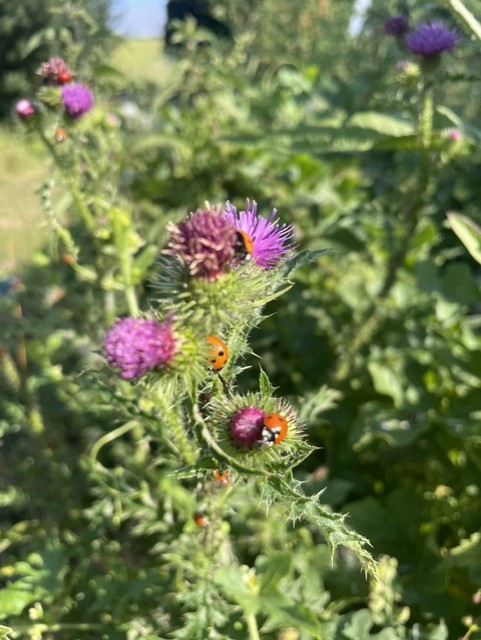
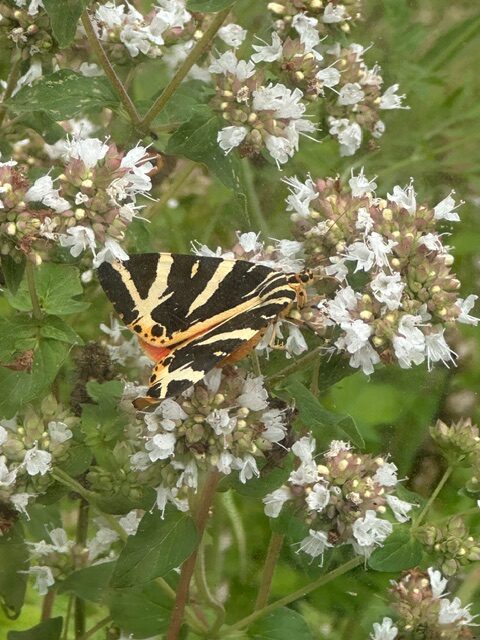
Take simple steps to help wildlife in your garden or local green spaces. Visit the Members area to explore our Actions for Nature, including:
- Replace hard boundaries with hedges
- Grow plants and flowers for pollinators and other invertebrates
- Drinking and bathing opportunities
- Leave areas of grass uncut
- Homes for birds
- Homes for bats
- Homes for bees
- Homes for insects and invertebrates