Five things we took away from the Oxford Real Farming Conference

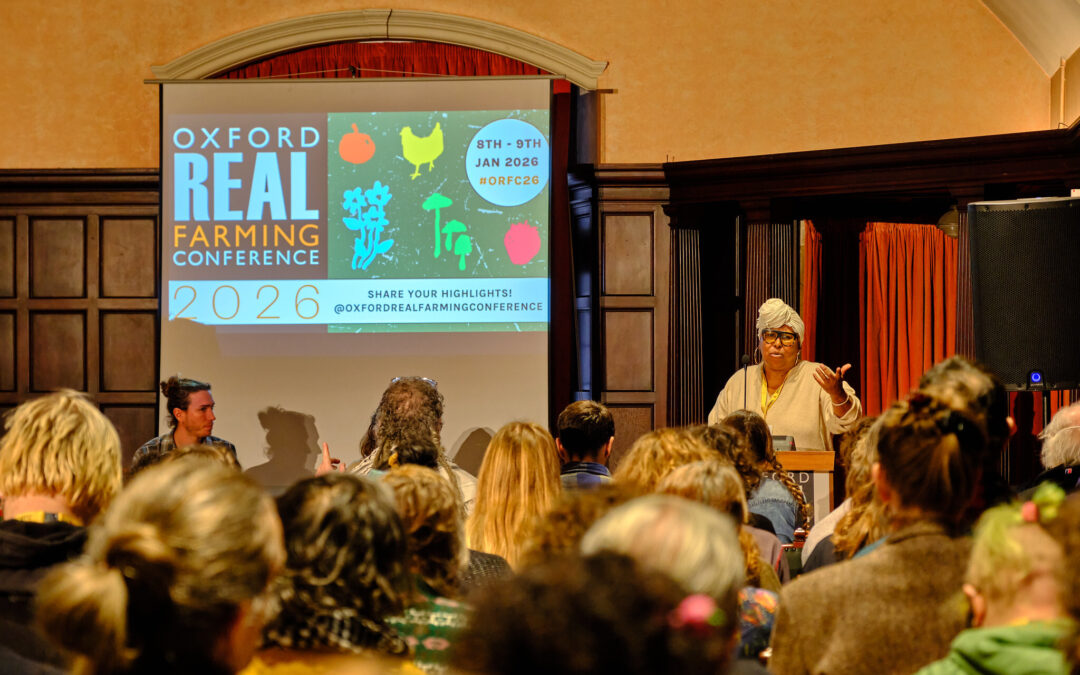
The Oxford Real Farming Conference (ORFC) brings together farmers, growers, activists, policymakers and researchers who want to transform our food and farming system. Now in its 17th year, ORFC is the largest gathering of the real farming movement in the UK, with 150 inspiring in-person sessions across nine venues in Oxford. The ORFC is a programme of the Real Farming Trust (realfarming.org), a charity devoted to food sovereignty and agroecology, that connects and supports people transforming our food system from the grassroots up.
With 70% of the land within Sussex farmed, there was no better place to kick-start the year with connection and inspiration. Here are five things we’re taking into 2026:
1. Be more dung beetle
Claire Wittle opened the conference with her account of falling head and heart for the humble dung beetle, thanks in part to Isabella Tree’s Book of Wilding. “Unknown to many, there are 60 species of dung beetle in the UK, and they are some of our smallest but greatest ecosystem engineers,” she tells a packed Oxford Town Hall, describing her journey from veterinary practise to regenerative farming. There are 60 species of dung beetles in the UK, and some can move up to 500 times their body weight. This process improves grazing grass for farmers by removing dung, burying organic matter into the soil, reducing fly egg numbers, and providing food for small mammals. All for free!

So, how can we be more dung beetle? Claire closes with, “These insects range from small to tiny, but it’s not their size that matters. It’s their abundance and their collective power to drive ecosystem change. How can we all work individually or collectively to break down all the crap that surrounds us and turn it into positive change?”
—- Weald to Waves is channelling our inner dung beetle by developing targeted species re-enforcement strategies across the corridor, supporting the recovery of water voles, beavers, hedgehogs and pine martens to enhance overall ecosystem resilience.
2. We’re stronger together
“Becoming organic was a slog, but it was a great and worthwhile journey because it’s a community builder,” John Pawsey, Director of Shimpling Park Farms, explained on a panel led by the Wildlife Trust about the role farm clusters can play in nature restoration. He continues, “Twenty years ago, we were essentially selling a commodity, and I had no idea where our products went, but now we have multiple connections.” John’s journey demonstrates how working together — by inviting producers like bakers to operate on-site, working with suppliers that care, like Hodmedod’s, or partnering with local farms to buy and sell together — is better for business, the planet and people.

The role of community in progressive farming systems was a recurring theme throughout the conference. In her opening talk, Victoria Llorens, co-manager of the Grow Moore Produce Co-op, drew on lessons from companion planting with asparagus to call on more growers to work with and support their wider community. In a session on “Learnings from farmer-farmer mentoring programmes”, Pasture for Life shared the results of a three-year Pasture and Profit in Protected Landscapes project. The research showed that aside from impressive actions for nature, farmers felt more confident and resilient with a supportive community behind them.
—— Pledged land within the Weald to Waves corridor continues to grow with farmland, gardens and greenspaces joining the dots to create bigger and better high-quality sites for nature, people, and farming.
3. Seeing is believing
It can be lonely being a farmer, particularly an organic or regenerative one, so finding ways to see and hear what others are doing is an important motivator and driver of change. Helen Bynum has seen this firsthand as Farm Wildlife Advisor for Suffolk Wildlife Trust. She told us that the strength of the Connecting Constable and Gainsborough Country farm cluster, which is putting ‘green veins’ through the breadbasket of England, is having flagship farms to show others what can be done. One of these is Lucy Manthorpe’s Kiln Farm, where efforts to control deer numbers led to an ‘instant and exploding’ effect on the woods and increased crop yield by £10.5k in 2022. Helen explains, “We didn’t want to tell people what to do but show them what’s possible and hope for cross-pollination between farmers. Now they have a plan that’s theirs and are motivated to share it with more people.”
—– Weald to Waves is establishing practical demonstration sites across the corridor, showcasing effective nature recovery techniques and providing evidence-based inspiration to encourage wider community and landholder action.

4. Resilience is investing in the next gen
Several sessions addressed the circular benefits of upskilling the next generation of land-based and green leaders and workers. While growers struggle to find the skilled workforce they need, youth unemployment continues to rise, and a mental health crisis permeates schools and further education institutions. But there’s another way.
Berni Courts, senior researcher at the Ruskin Mill Trust, explained the holistic education model that supports young people with complex needs at 16 Ruskin Mill education centres across the country. Through land- and craft-based workshops and a curriculum rooted in seasonal, practical work, many young people transform in esteem and ability. Henry, a student at one of the centres, told us, “Since starting at Ruskin, I have completely turned around. I have learnt skills and done things I never thought I could.”
Celebrating neurodiversity in land-based work and learning, Rachel Phillips from the Apricot Centre reminded us of the Harvey Blume quote, “Neurodiversity may be every bit as crucial for the human race as biodiversity is for life in general.” Through dynamic, diverse learning methods, the Apricot Centre witnesses how agroecology learning courses build competence, confidence, and collaborative problem-solving skills.
These themes continued in a session delivered by Plumpton College, Apricot Centre, Organic Growers Alliance, and Emerson College, unpacking the needs of entrants and employers when delivering agroecological apprenticeships.
—– Through the 100 Mile Classroom, Weald to Waves is getting young people more engaged in nature recovery on their doorstep through in-school, curriculum linked resources, matching schools with nature learning sites, and creating more opportunities for work experience, apprenticeships and upskilling.
5. Nature connection’s secret ingredient…
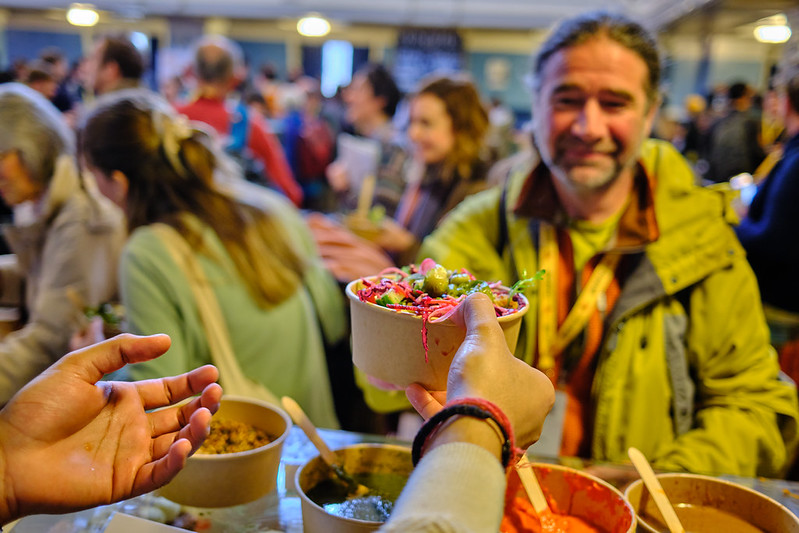
… is food. In a country where 70% of the land is farmland, using regenerative farming to restore nature feels like a no-brainer. Turning to more wildlife-friendly farming and growing methods not only leads to better outcomes for nature and more resilient communities but also helps solve our nation’s nature connection problem (ranked one of the world’s least connected nations). The more people are engaged in what they eat, where their food comes from, and how it is produced, the more we will see a groundswell movement of support for shifting our food and farming systems.
At the Emergent Generation Speakers’ Corner, Mitchel Green led a session on reconnecting town and country. Young growers like Sinead Fenton, growing edible flowers on Aweside Farm in East Sussex, and Stevie Back from Sitopia Farm in East London, agreed that to make change to the food system, you need to break down barriers from rural to urban and from farming to food. One way of doing this is helping more young people understand the context of where food comes from. Another is to help more small-scale growers and farmers get products in front of consumers through hospitality experiences, as discussed by Harry Dyer, co-founder of Shrub and Geetie Singh-Watson, co-founder of The Bull Inn.
On a panel discussing “Innovation in food systems for nature recovery”, Devon farmer Holly Purdey agreed that engaging directly with consumers through food boxes and markets is important and that this needs to work alongside system change from the top. “We urgently need to shift the power balance through policy,” she concluded.
—— Weald to Waves is helping members adopt regenerative and agroecological practices that diffuse pollution, sequester carbon, enhance nature, and reduce environmental pressures demonstrating cost savings through reduced input use and increased revenues. A win-win!