
Wilding Gardens Conference 2026, Gardens at the Heart of Recovery
Understanding how we can better support nature recovery in our gardens and greenspaces was the focus of the inaugural Wilding Gardens Conference in Manchester in January this year. Bringing together an extraordinary mix of garden designers, rewilders, organisations and everyday growers, the event marked a significant moment: a recognition that gardens — rural, suburban and urban — are not peripheral to nature recovery, but central to it. Weald to Waves was delighted to take part in the event, sharing Sussex’s landscape-scale recovery journey while gathering ideas and inspiration to bring back to our members and communities.
Across two information-packed days, a powerful shift in thinking emerged. The message was clear: wildlife-friendly gardening is not about adding isolated features, but about embracing complexity, process and connection. Healthy gardens function as dynamic systems — constantly evolving, more like kaleidoscopes than static designs. They rely on soil health, varied planting, water sensitivity, decomposing matter and physical structure — the humps, hollows, shade and shelter that allow life to flourish. Just as importantly, gardens were framed as stepping stones within a much wider ecological network. Looking beyond the garden fence — and recognising each space as part of a connected landscape — was a recurring and urgent theme. What follows explores some of the most groundbreaking ideas shared at the conference, and what they mean for gardeners and greenspace managers across Sussex and beyond.
Opening the 2 days Craig Bennett, Chief Executive of the Wildlife Trusts talked to the 400 plus attendees, about the huge potential for reversing biodiversity loss that increasing connection between people and nature offers. A theme that would be echoed by many speakers to come.
Taking that idea one step further it soon became clear that nature doesn’t just need joined up habitats to thrive, but complex varied spaces where natural processes can play out. We were hearing the call for dynamic systems in gardens, not just the inclusion of wildlife features. The conference itself was initially the conception of Adam Hunt whose garden for Rewilding Britain won Chelsea Flower Show’s best in show in 2022. Inspired by a beaver dam, his partner at Urquhart and Hunt Lulu Urquhart went on to paint a picture of how that dynamic landscape felt and sounded. A sea of thronging insects and other wildlife that was captured in the winning garden. The importance of biodiversity in all our greenspaces was thrillingly illustrated by entomologist Erica Macillister, Principal Curator at the Natural History Museum. Regaling us with facts around her favourite insect ‘the fly’ we were reminded that more species of such exist in the UK than mammals globally. A fact that sings loudly to their potential for driving biodiversity numbers up, including in our gardens. Often seen as an irritation these varied and complex individuals seemingly need the press glow up of the honeybee to gain human approval. In return they simply ask that our garden spaces are a little messy and varied in places, to facilitate their complex life cycles.
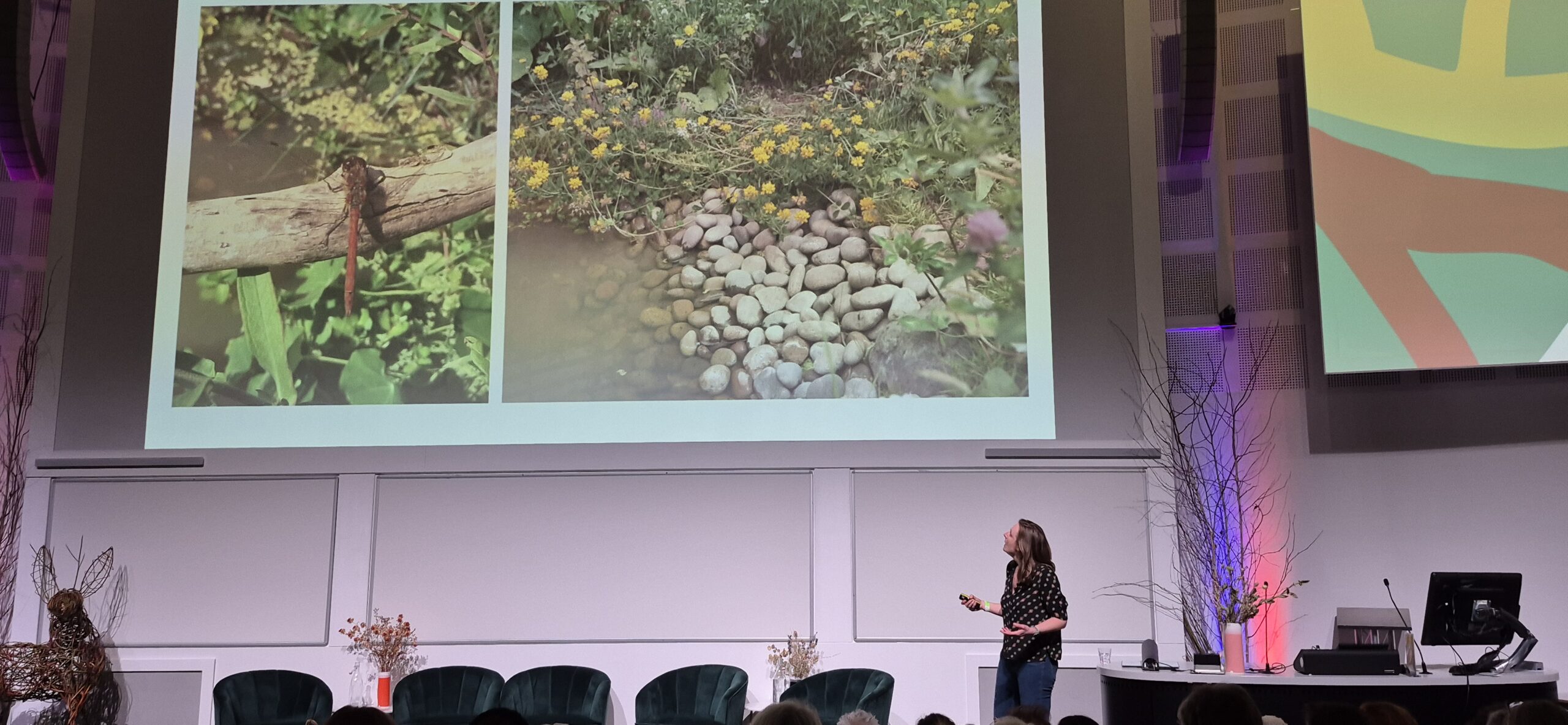
This doesn’t seem much to ask when we know about the vital role that insects play in supporting our UK food production. The Cloud Gardener Jason Williams, curator of a balcony garden in Manchester, described the fascinating hoverfly pond habitat he had designed during lockdown. Aquatic insects, Japanese rice fish, and the resulting fertiliser came together to create a rich ecosystem, producing a city centre micro food garden. Speakers such as Joshua Sparkes highlighted in his work at the Woolsery Collective in Devon, not only the unique ways biodiversity is taking centre stage whilst producing food. But also how the connection between their food forest, livestock farm, shop and restaurant creates profitable landscapes for biodiversity and people at scale. A story told again and again over the two days was of joining the dots between garden spaces in schools, cities, historic gardens and backyards nationally. All putting nature at the centre and coming together in a dynamic landscape.
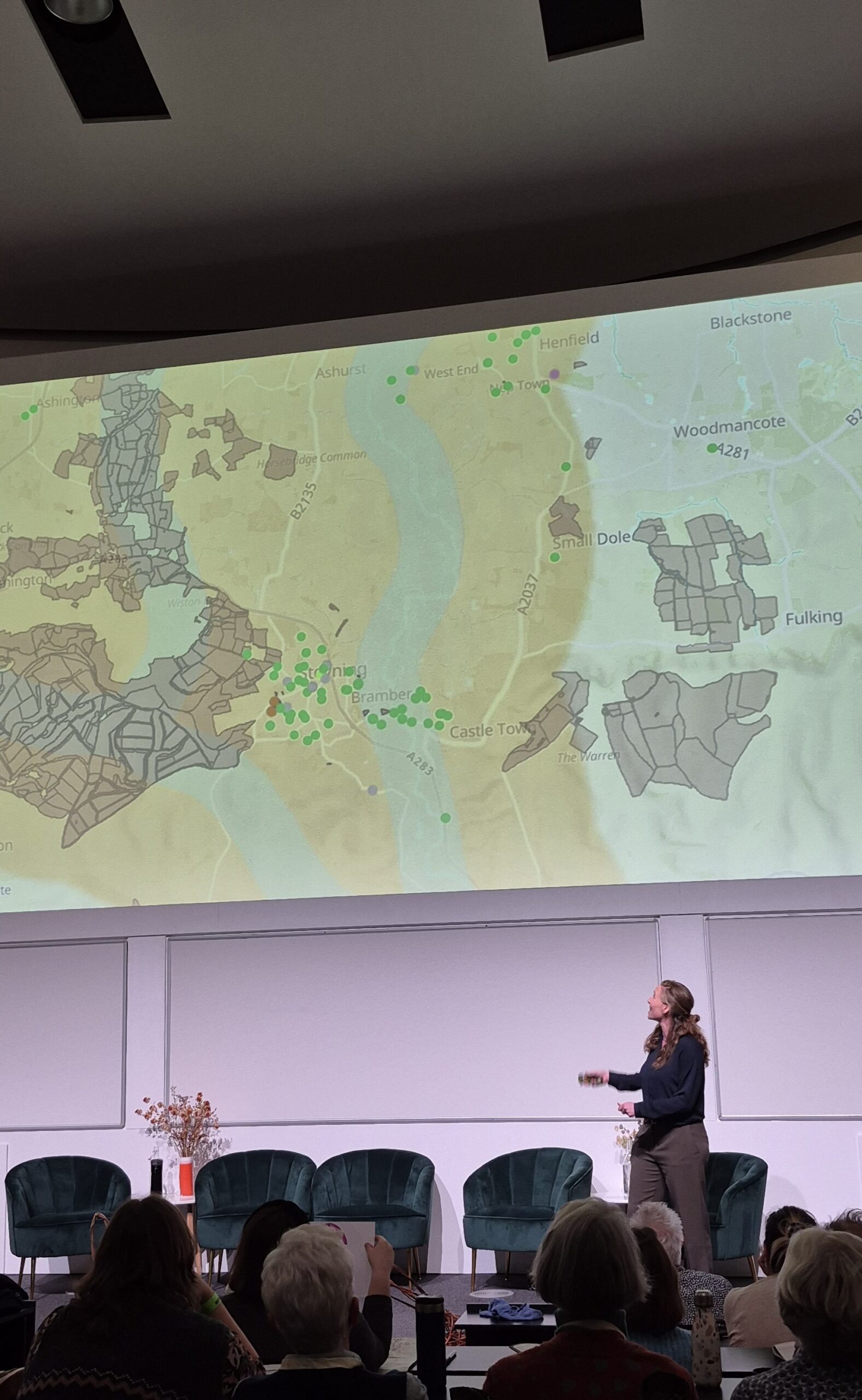
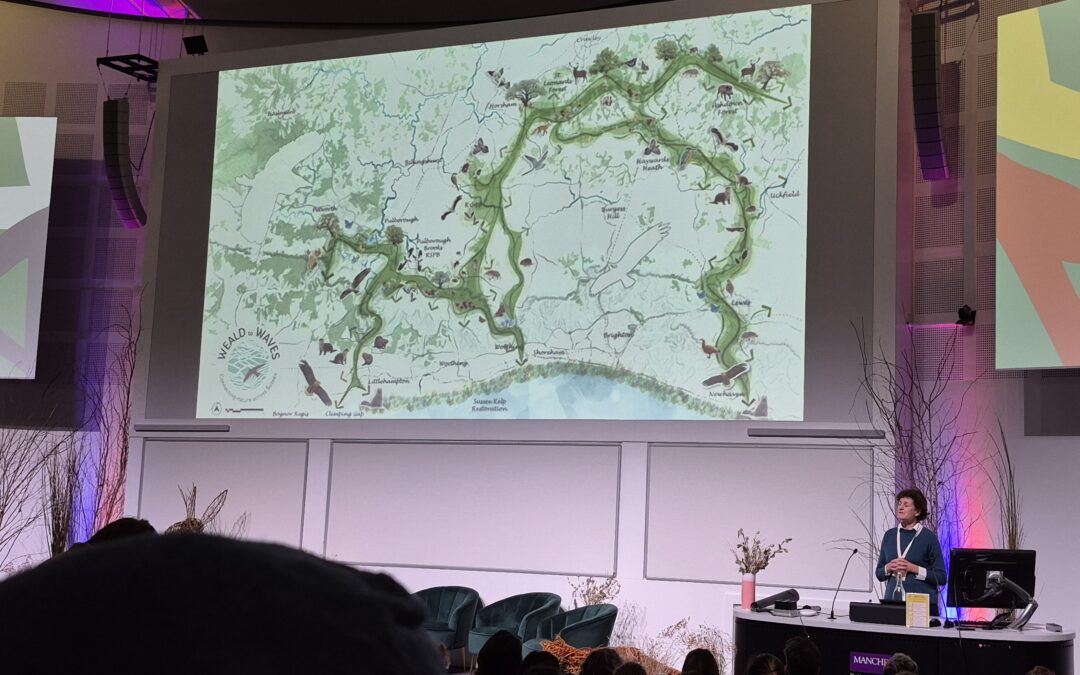
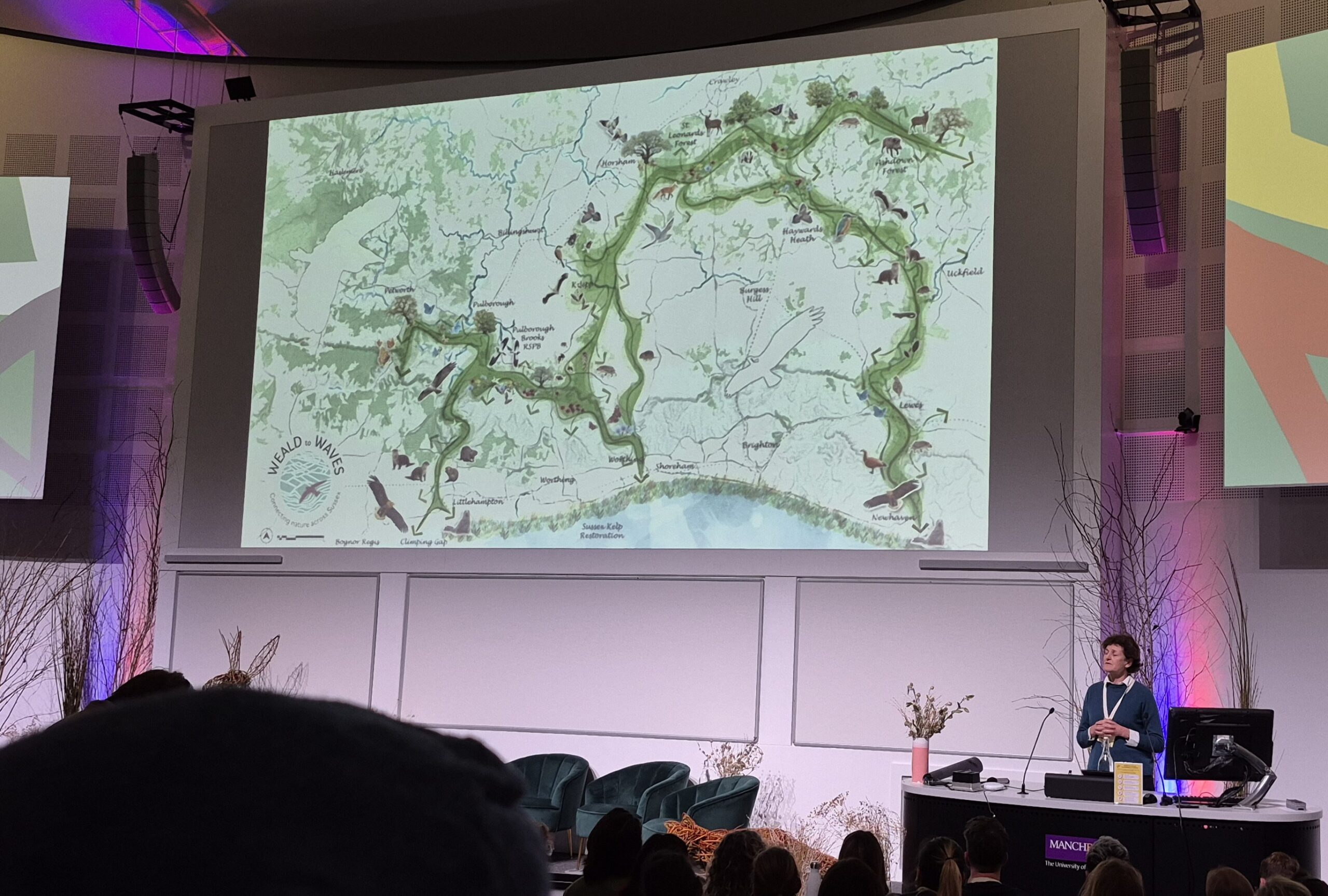
The most easily recognised garden was Great Dixter of which the endlessly generous and enigmatic Fergus Garett spoke of their Biodiversity Audit. Dixter showcases the real-life example of how gardens designed and stewarded for people intensively, can have a part to play in supporting biodiversity. A beacon for those that worry gardening for wildlife means neglect. Our own Libby Drew captured the mood of optimism and connections at scale introducing the Weald to Waves project to the Northern audience. Following a talk from Cyan Lines, an ambitious project to join up the green and blue of Manchester, corridors were now firmly on the agenda and full of gardens, and gardeners as John Little reminded us. Andy Burnham’s rousing summary of the 2 days and commitment to make our hosting city one of the greenest, wrapped up what felt like a sea change moment.
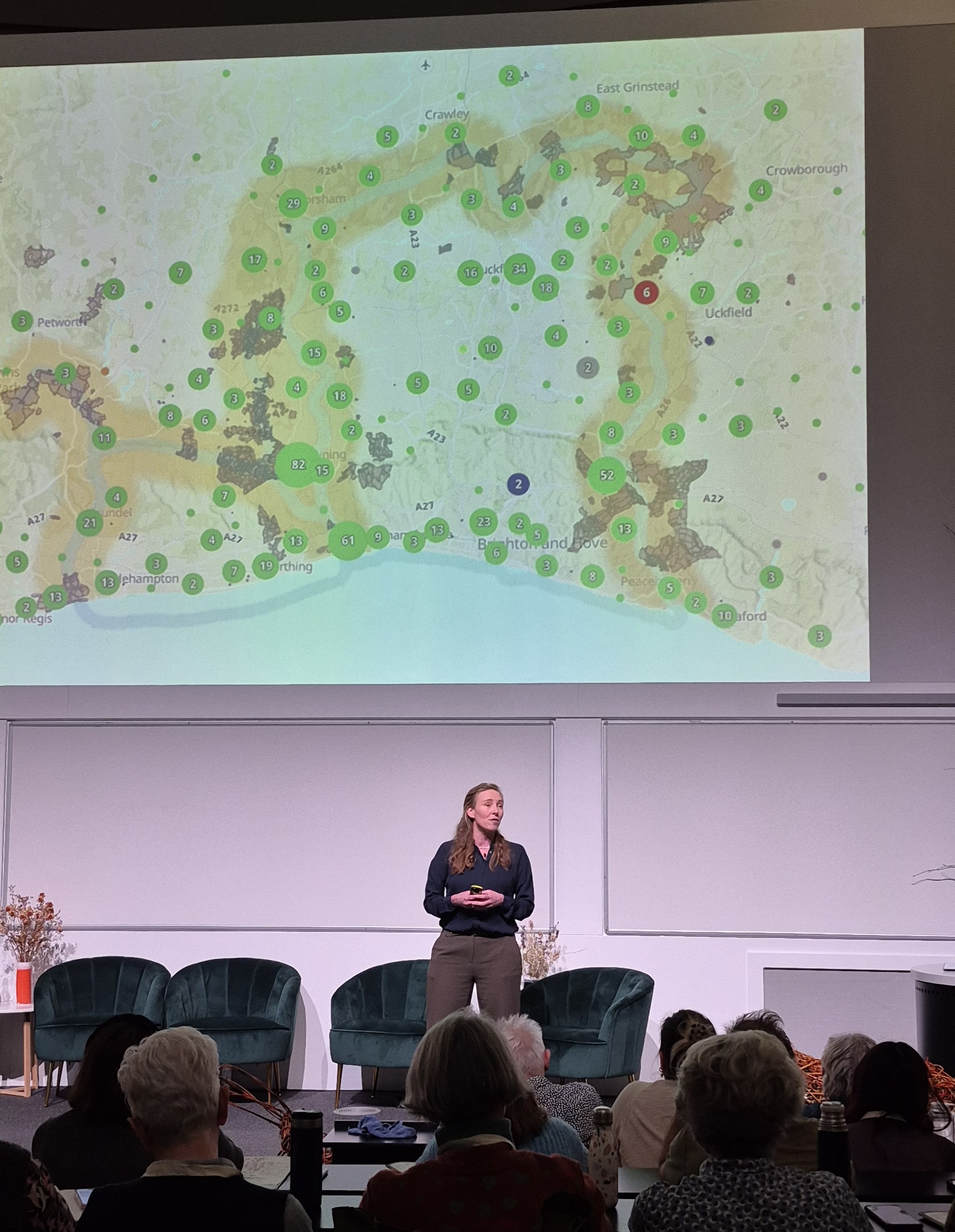
The variety in speakers we enjoyed was perhaps the most telling part of the whole conference. Gardens are part of the bigger nature recovery story now, all 23 million of them in the UK. Their importance in connecting people and nature, offering stepping stones in fragmented habitats, was echoed by politicians, designers, ecologists, sound engineers and researchers. From organisations at the scale of the National trust to window boxes, we heard that the variety and diversity that outdoor spaces have to offer nature recovery is key. Join that up with farmers and Landowners, and new green infrastructure as we are doing in Sussex through Weald to Waves and we have the potential for functioning ecosystems at scale. Ones in which people, food production and nature co-exist; gardens are an essential part of a hopeful connected movement for nature recovery.