Why Did the Toad Cross the Road?
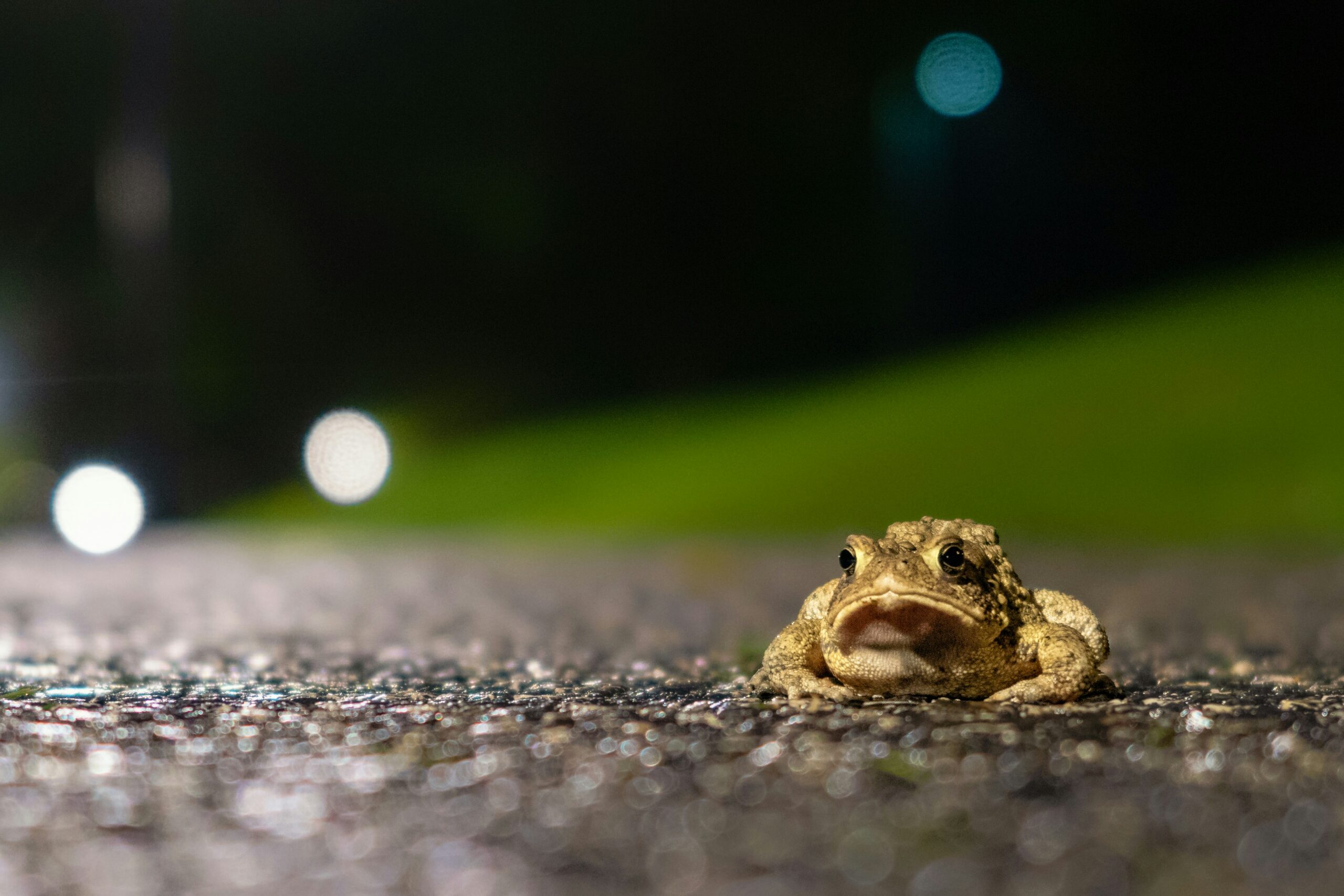
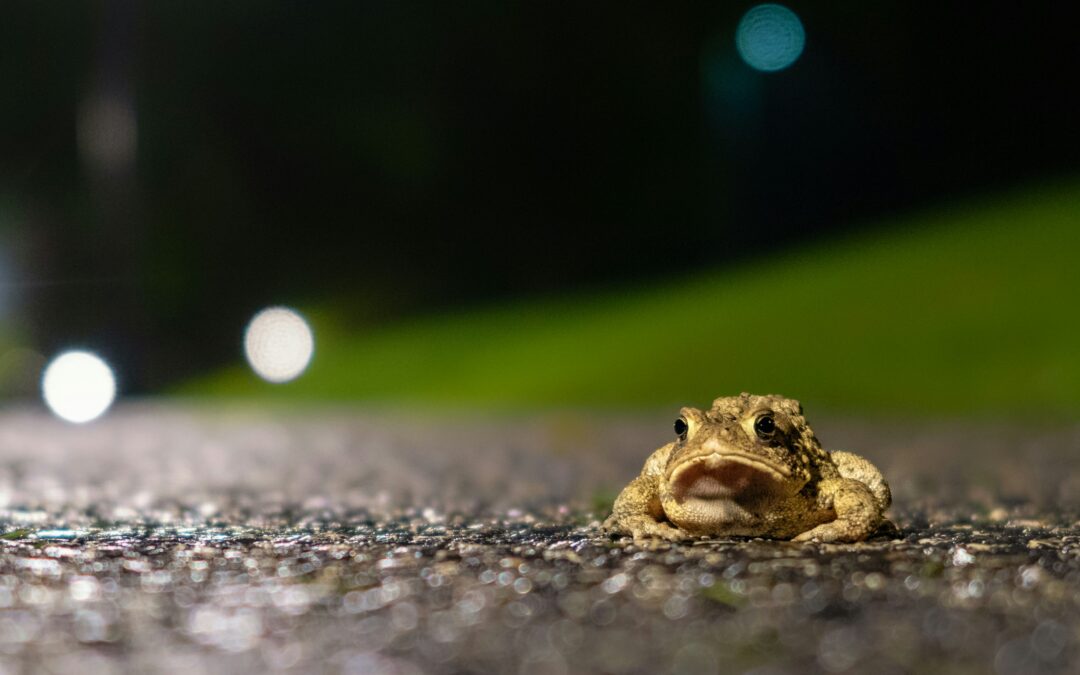
As spring arrives and evenings grow warmer, something remarkable begins to unfold under the cover of dusk. On damp, mild nights, common toads emerge in the thousands, embarking on a determined journey to their ancestral breeding ponds.
This mass migration is guided by instinct, each year returning to the same breeding sites, no matter what obstacles lie in their path. Yet our landscapes are rapidly changing. Fields and hedgerows, once offering safe passage have been replaced by houses and busy roads. The route remains the same, but the journey is far more dangerous.
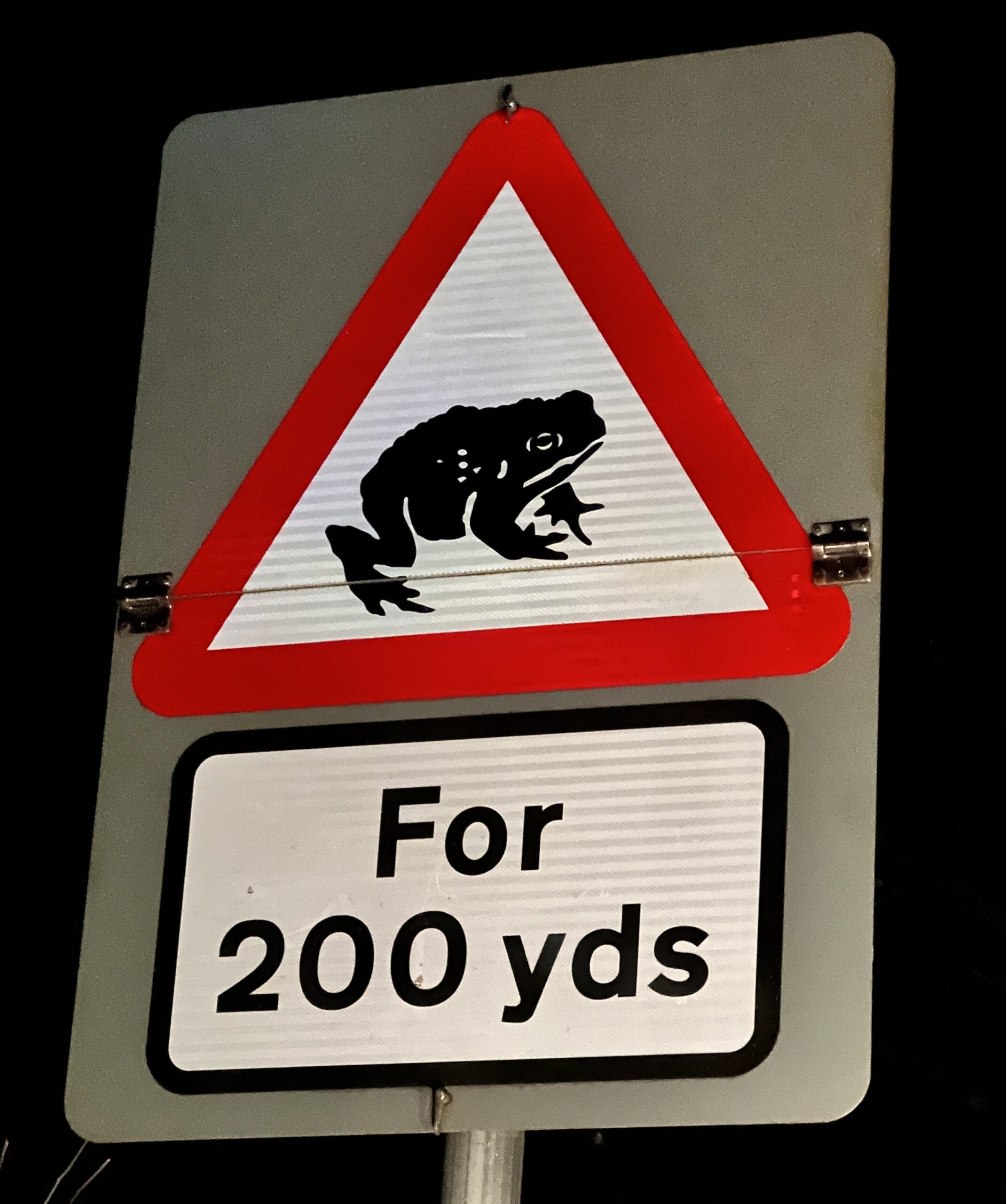
Toads move slowly and cannot sense oncoming traffic, so road deaths are tragically common. Around 20 tonnes of toads are killed on UK roads every year, making roads a serious threat to toads and other amphibians that must move seasonally between habitats. Combined with habitat loss, pollution, and climate pressures, these challenges have contributed to a staggering decline of around 68% in the UK common toad population since the 1980s.
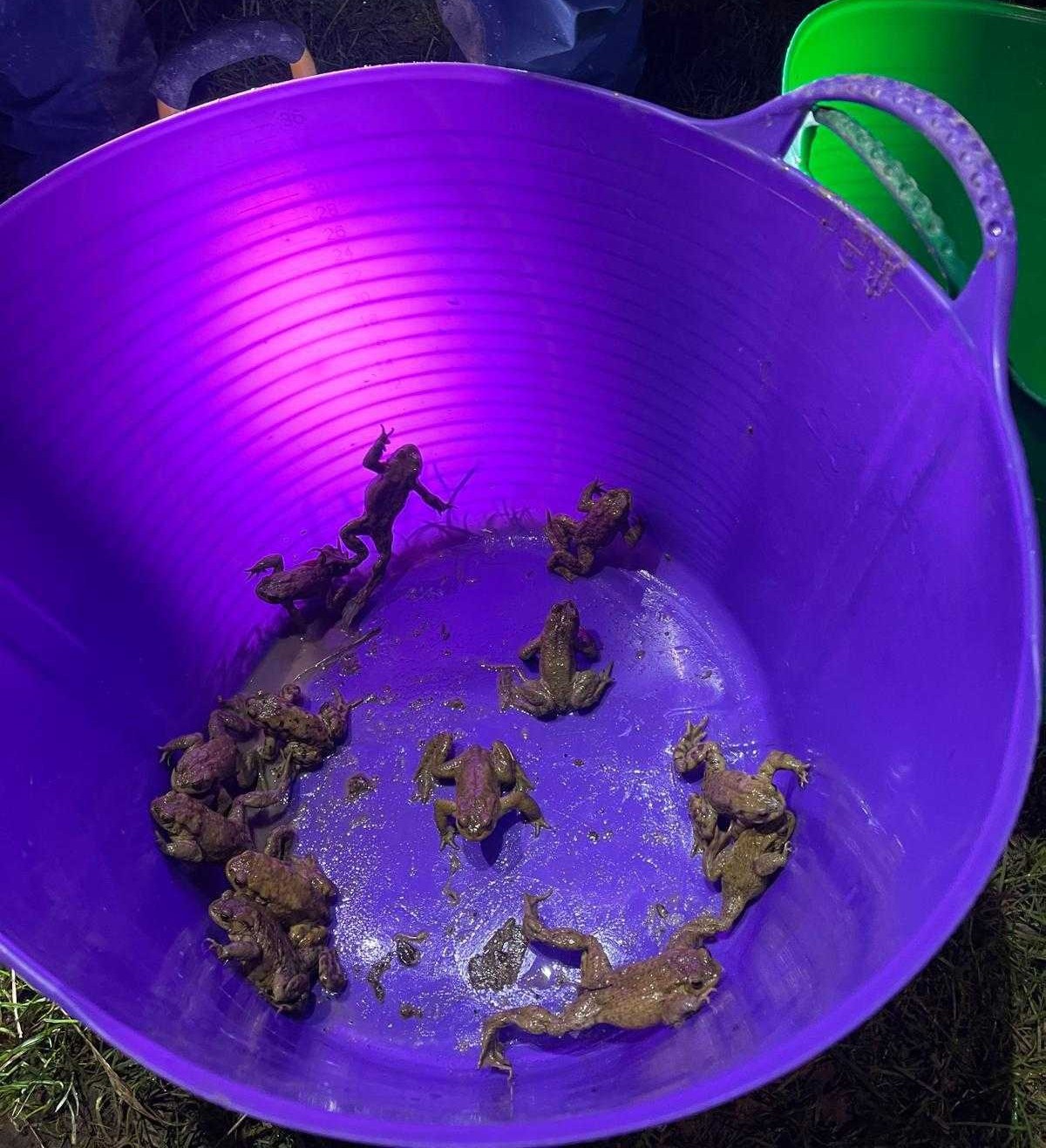
There are practical and accessible ways to help, and local action is already making a real difference. Each spring, volunteers run organised toad patrols at key crossing points, carrying toads safely across roads and working with councils to install warning signs for drivers.
You can find a nearby patrol or crossing point, and see where help is needed, using the Froglife Toads on Roads map. You can also support conservation by taking part in the Freshwater Habitats Trust PondNet spawn survey, which records important frog and toad breeding sites.
Toads are also far more valuable than their slimy reputation suggests. They are natural pest controllers, feeding on slugs, snails, and beetles in gardens and farmland. By keeping these populations in check, they help protect plants and crops, providing a free ecosystem service without the need for harmful pesticides.
Sometimes, conservation is as simple as helping a toad cross the road!
Weald to Waves Habitat Connectivity Modelling
Alongside on the ground conservation work, Weald to Waves is using habitat connectivity modelling to understand how easily wildlife can move across the Sussex landscape. This modelling helps identify important movement routes and highlights bottlenecks where the landscape becomes difficult for species to pass through.
These pinch points matter because they affect how animals disperse, shift their range, and maintain healthy populations through gene flow, especially as habitats become more fragmented and the climate changes.
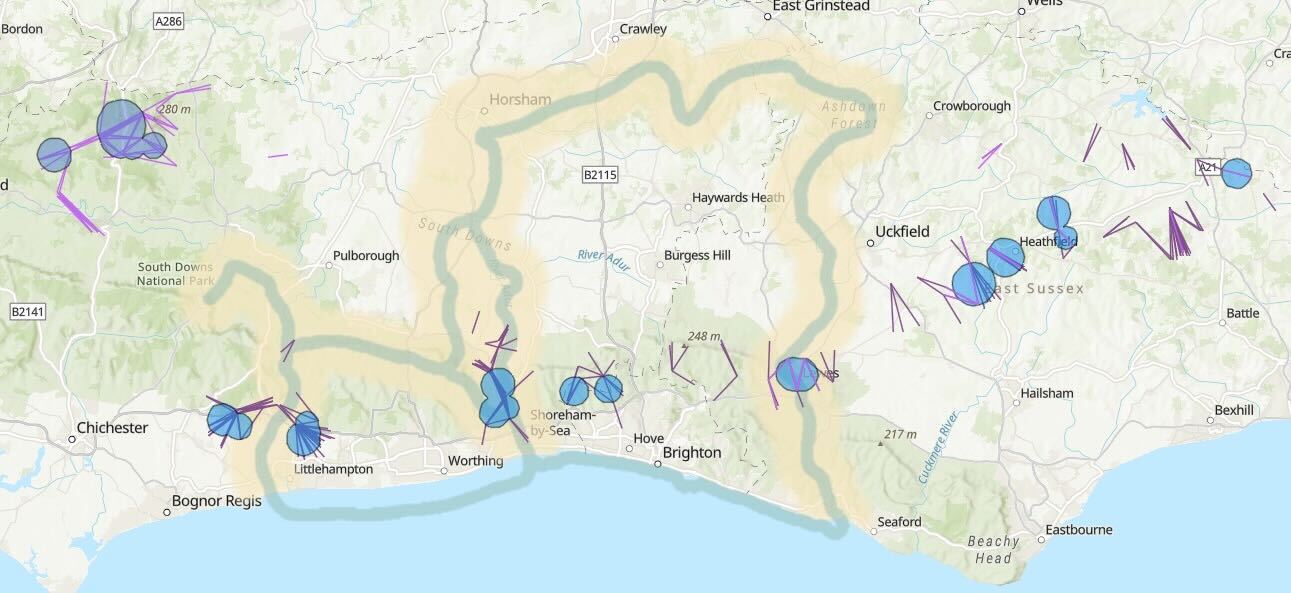
Our early findings show that connectivity bottlenecks for frogs and toads (shown as blue circles) are often clustered around the edges of coastal towns and larger settlements. Key pressure areas include the urban fringes around Arundel, Shoreham, and Lewes, as well as parts of the High Weald such as Waldron and Heathfield. We are continuing to build and refine this modelling to better target conservation action where it can have the greatest impact.
Get Involved!
Across February and March, we are looking for stories, photos, and short videos from people taking part in local toad patrols across the corridor and wider Sussex. What inspired you to get involved? What is it like being out on patrol at night? How do drivers respond when they see you helping toads across the road? Your experiences help bring these migration nights to life and inspire others to take part. Contact us at info@wealdtowaves.co.uk.