
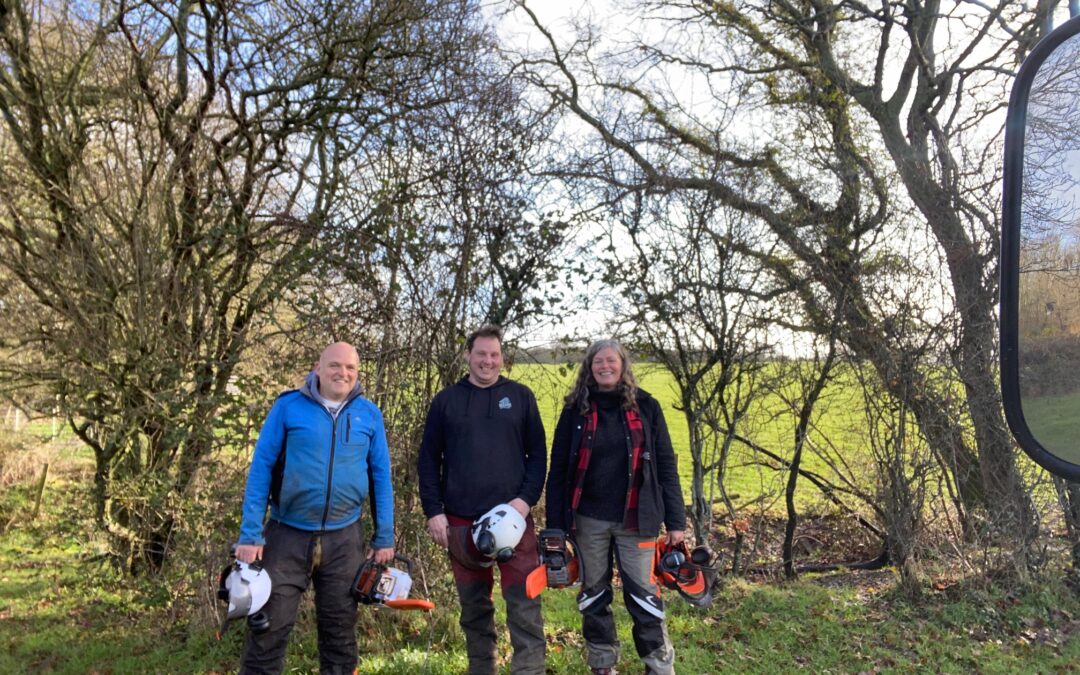
Hole Street Highway – A Corridor for Wildlife
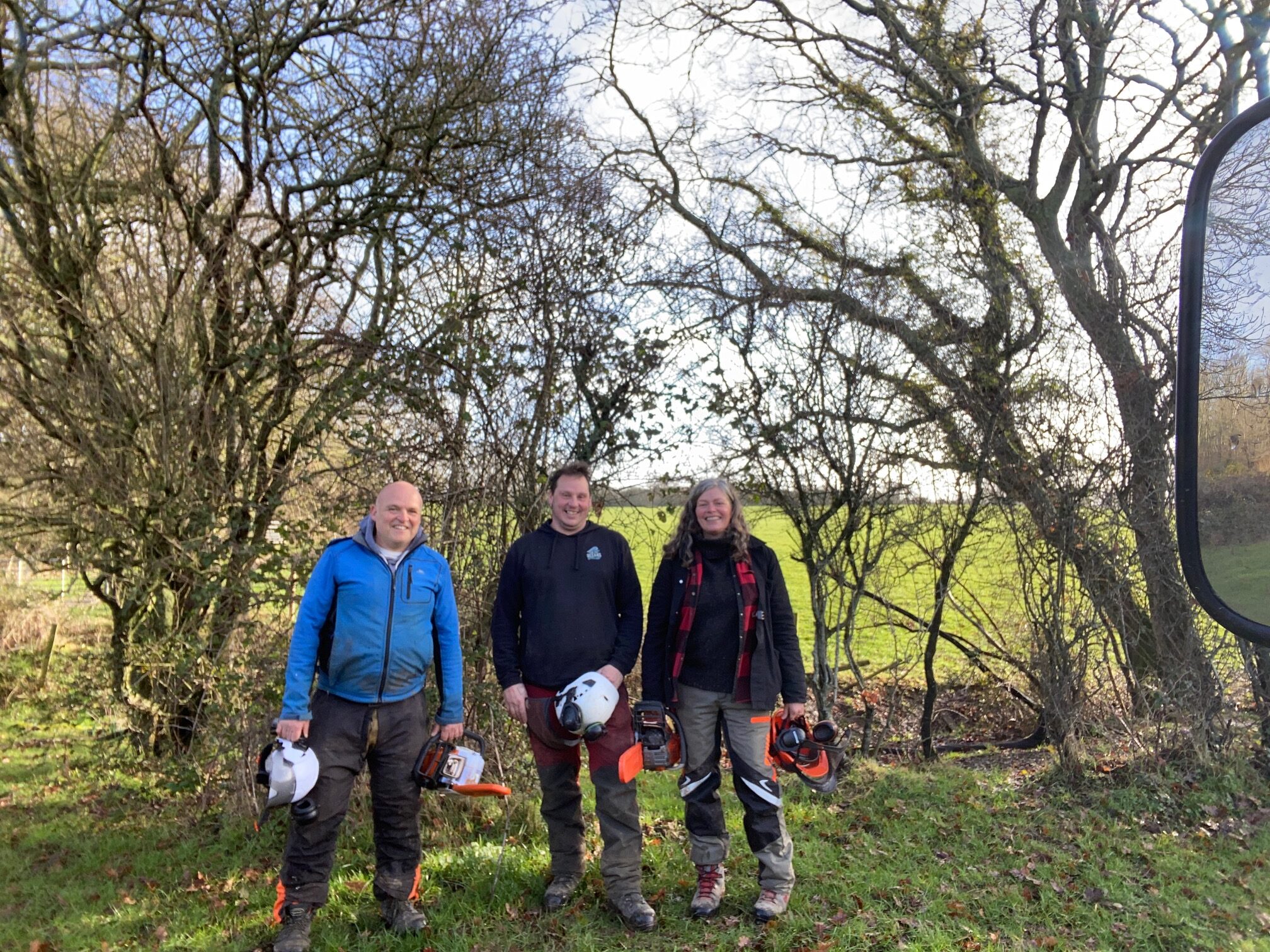
A few months ago, Stephen and I (Cathy) were staring at maps of our two coppice sites at Ashington and Wiston, because that’s what we do for fun on a Friday night, and we were musing that the sites are only about a mile apart, and then we noticed something really exciting…
The sites can be viably connected up via a continuous hedgeline from the Ashington site, to Trickles Wood at Wiston, creating a corridor for wildlife between our two coppice sites.
Much of the hedgeline already exists, but needs work – some of it needs laying and maintaining to fill in gaps and make it stock-proof, elsewhere there are opportunities for planting, and as part of the project we’ll need to plant up a couple of stretches of new hedgerow.
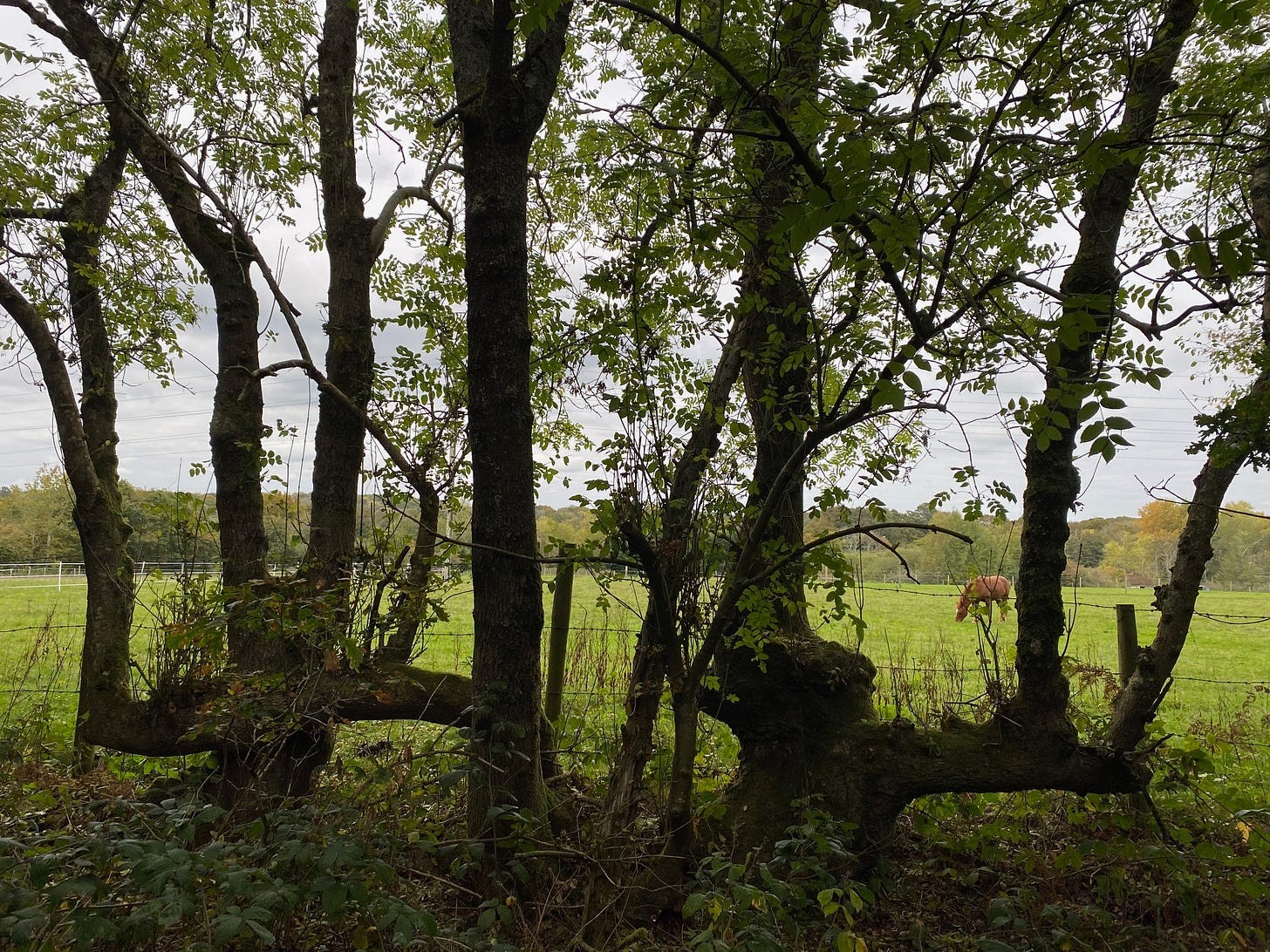
The project spans four landowners, including the landowners at Ashington and the Wiston Estate, and the final 180 or so metres down to Trickles Wood has evidence of an ancient hedge, as demonstrated by the ash in the photo below.
You can see from the shape of the ash (the right-angles on the trunks and the growth from along these trunks) that once upon a time this was laid to form part of a hedgerow. We love the idea of restoring this hedge to create a new highway for wildlife, which we’ve dubbed the HOLE STREET HIGHWAY as the hedgerow will roughly follow Hole Street, via which both of our coppice sites are accessed.
Several consultations, conversations and surveys later and it’s looking extremely promising that the project can be funded. We’ve divided it into several phases so it’ll be at least a three-year endeavour. By the end we hope to have close to a kilometre of regenerated, restored or new hedgerow which is also inside the Weald to Waves ‘buffer zone’ alongside its major nature corridor.
We will also have connected up much more than our two coppice sites – we will have created a corridor that stretches from the Ashington side of the A24, all the way to the large and beautiful Capite Wood in the heart of the Wiston Estate, passing through ancient woodland, long-established woodland, farmland, copses, water meadows, fishing lakes and into acres and acres of more ancient woodland.
It’s a really exciting prospect for nature recovery and connectivity in West Sussex, and we’ve been working closely with Weald to Waves to tie in with their vision of a nature corridor stretching from the Ashdown Forest all the way to the sea.
It’s also really exciting for wildlife, as Capite Wood joins up with Daylands Farm, owned by the Wiston Estate and managed by Derek Crush. Derek is a fountain of knowledge of the land, and Daylands is known to be a hotspot for nightingales, turtle doves and other rare and threatened species which can all benefit from a more connected habitat.
We’ll be carrying out the work via two models – firstly as contractors, and secondly alongside our Roots community through our social forestry model. With this in mind, our two community coppicing dates at Ashington in February are likely to become hedgelaying days – we’ll have the same great vibes, food, drinks, snacks and chat, but the task in hand will be hedgerow work, not coppicing.
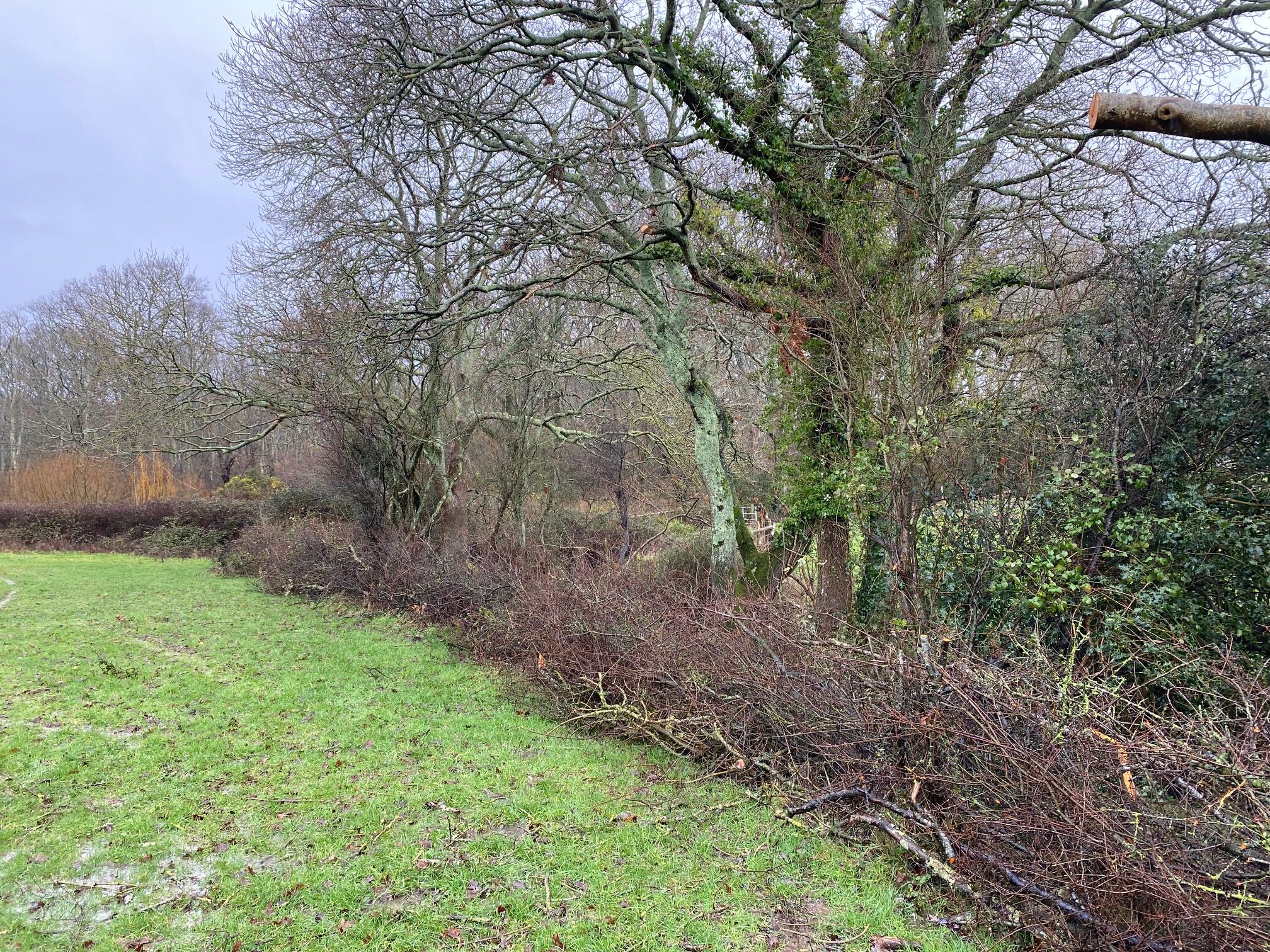
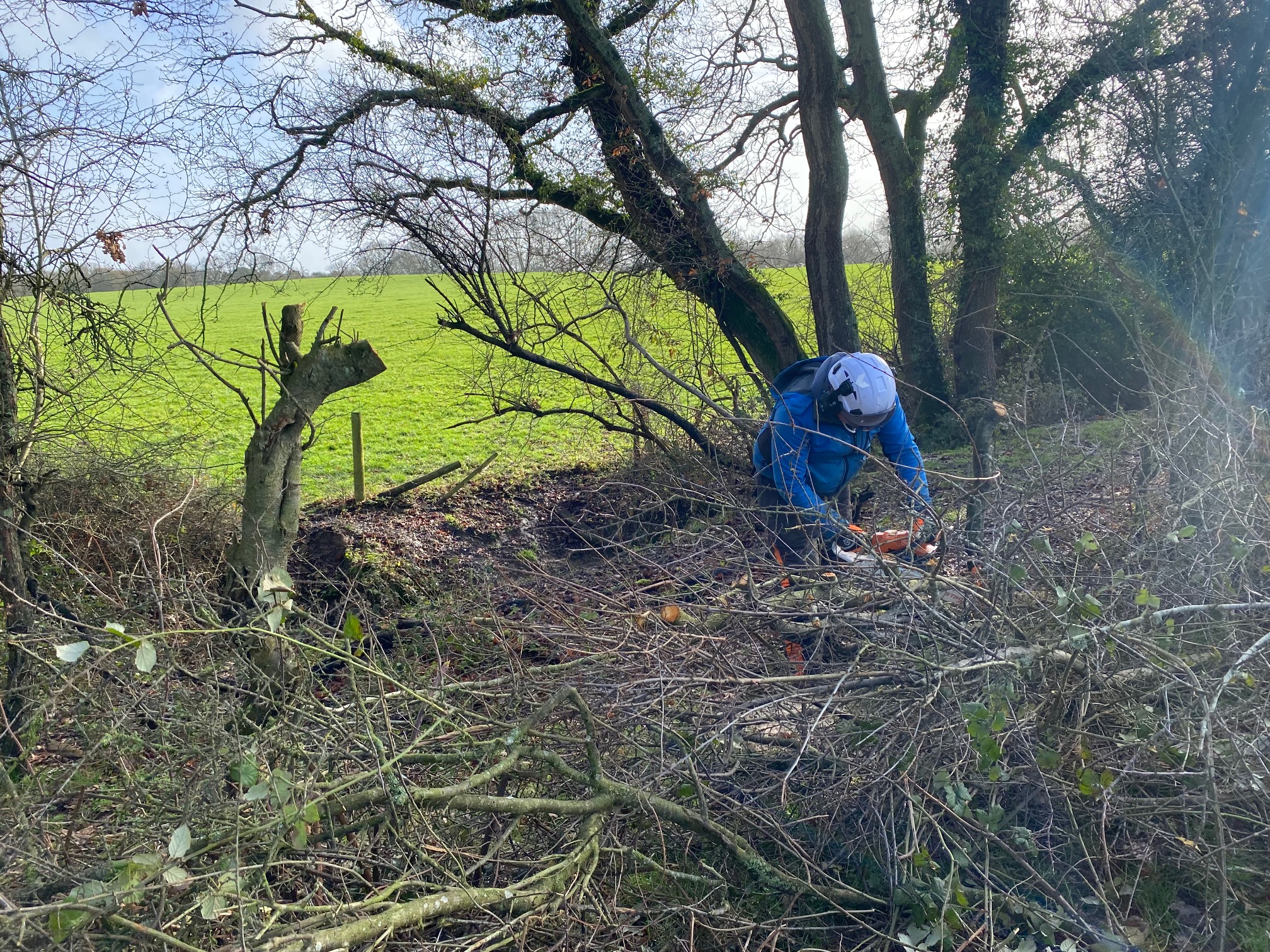
Updated progress. Blackthorn hedgerow laid, by Roots West Sussex