
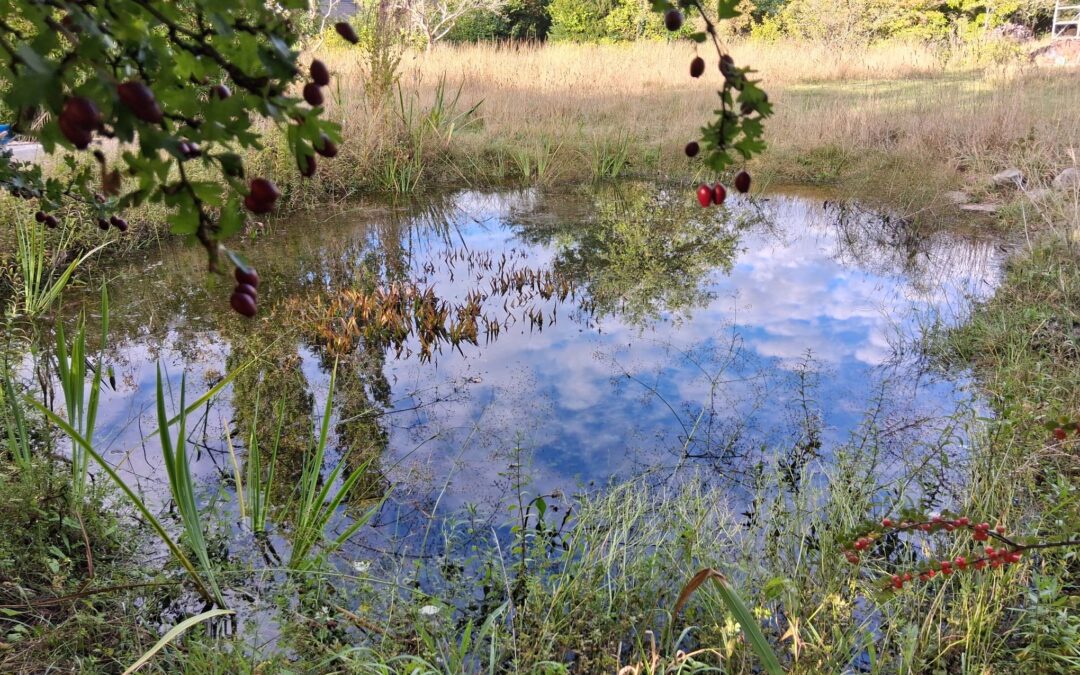
Water and Wedges, Shaping a Garden for Wildlife
The Inspiration
In August 2020, we moved from urban SW London to a downland village, and I realised a long-held ambition to own a house with a large garden, in this case, just under 1 acre. As a child, my dad encouraged a love of nature, but it was only later in life that I changed career to study conservation and work for a Wildlife Trust for a few years. So, although I’d always gardened with nature in mind, this was an exciting opportunity to put some of the conservation techniques I’d learnt about into practice, and on a larger scale than had previously been possible in our urban plot.
An Unloved Plot with Great Potential
At first glance when we moved in, the garden hadn’t looked too neglected, but the reality was much more daunting!
The garden is roughly rectangular, with our house sitting in the NW corner. It contained:
- Large lawns mown very short
- Island beds, overrun with dogwood, old man’s beard, and bramble, all species that love to take over neglected gardens
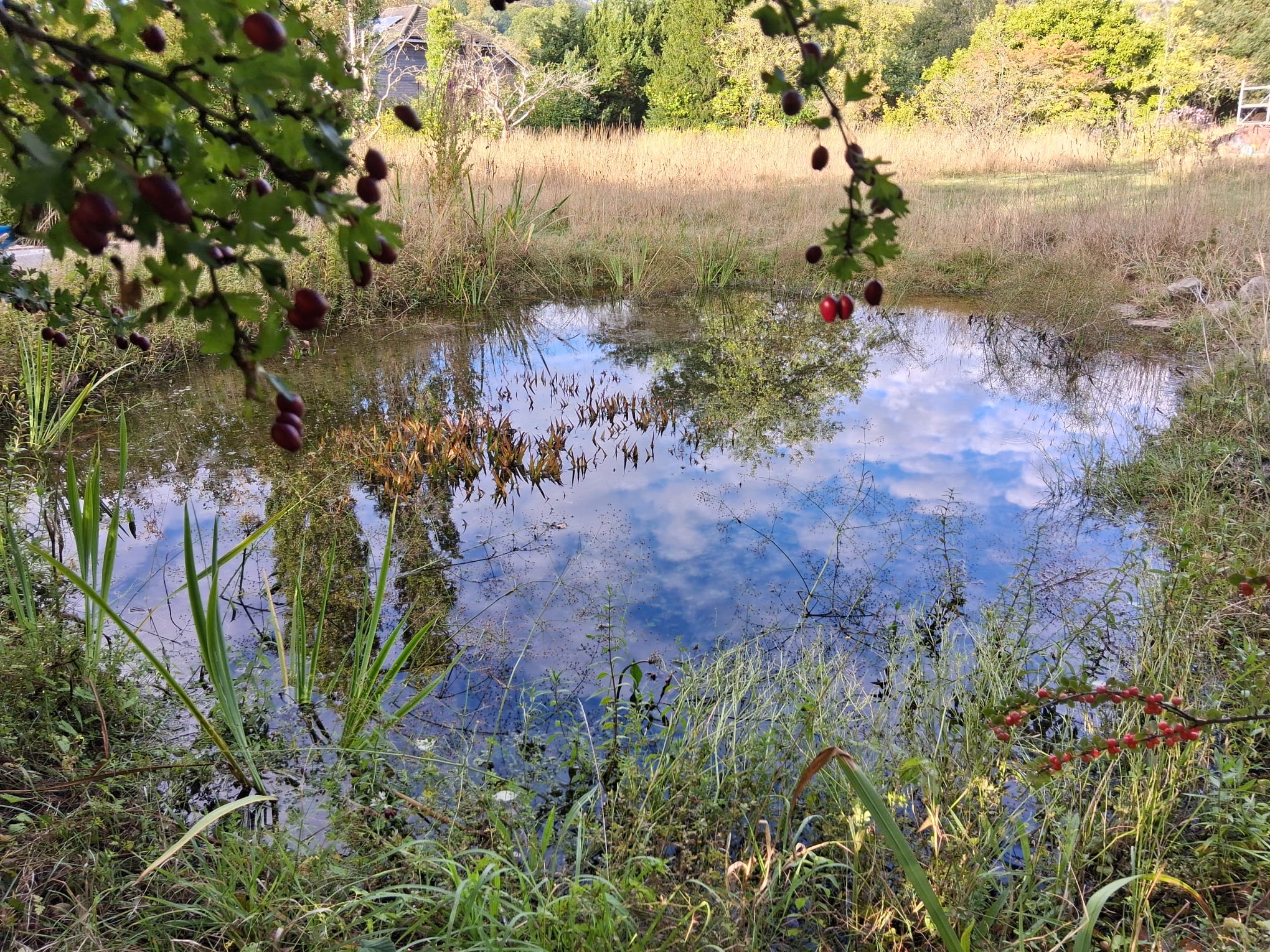
- A medium-sized, completely derelict pond, full of native yellow flag and reed mace
- A steep lane-side bank hid the house under brambles, creating a sense of seclusion.
- Boundary plantings of laurels and mature conifers blocked views of the downs and overshadowed other plants.
- Fruit trees, including a large ornamental cherry, two apples, and some plums, were mostly dead
- A large, grassy oval in the middle of the garden which appeared to have been managed as a ‘meadow’ – yay!
Getting Started
To avoid feeling overwhelmed, I focused on two major projects that would benefit wildlife and be adaptable to most garden sizes:
- Replacing the conifer and laurel boundary plantings
- Renovating the pond
Creating a Wildlife ‘Wedge’ (or Woodland Edge)
What we did:
- Removed 40+ mature conifers and three large laurels, opening up long-hidden views of the downs.
- Left a few native elders to regrow and integrate into the new planting.
- Planted 150 native trees and shrubs including hawthorn, hazel, spindle, guelder rose, wayfaring tree, and dogwood, chosen for their multiple benefits to wildlife.
- The plants were arranged in a ‘wedge’ formation, spaced more widely and irregularly than a traditional hedge, with a wavey front edge to maximise the amount of transitional area. This design mimics a natural woodland edge and creates a rich, layered habitat.
Why it matters:
Dense boundary vegetation has huge potential for wildlife. It provides vital shelter, safe routes through the garden away from predators, and navigation features for species such as bats. Depending on the plants chosen, it can also supply a valuable source of food. The original conifers and laurels offered very limited wildlife benefit, while a mixed native planting can deliver far greater value once established.
The area where boundary shrubs meet surrounding vegetation is especially important, as it forms a transitional zone rich in microhabitats and wildlife opportunities. In the ‘wedge’ approach, plants are spaced more widely and irregularly than in a traditional hedge, with a wavey front edge designed to maximise this transitional area. This layout mimics a natural woodland edge, one of the most biodiverse habitats found in the landscape.
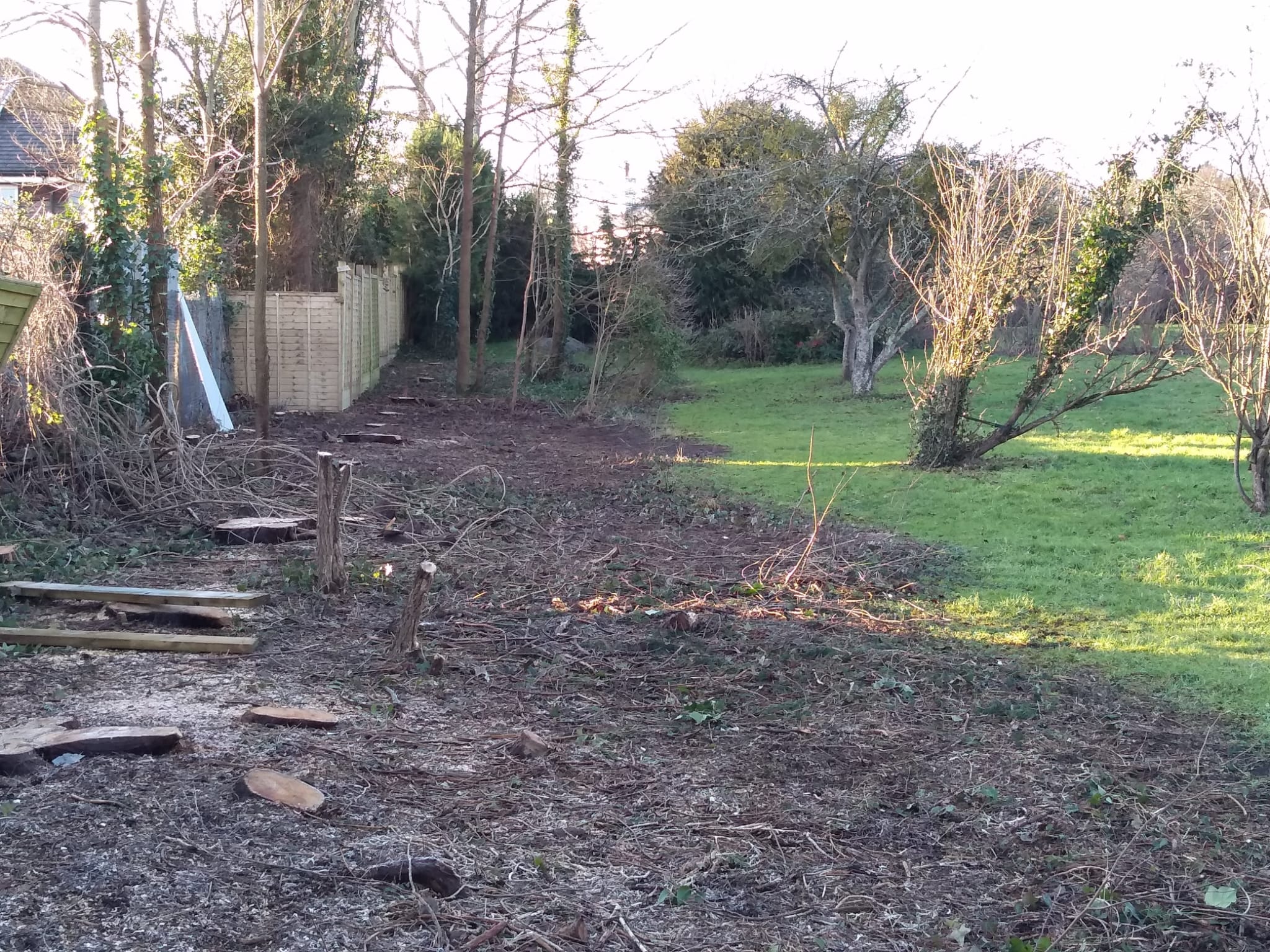
Garden Wedge Before
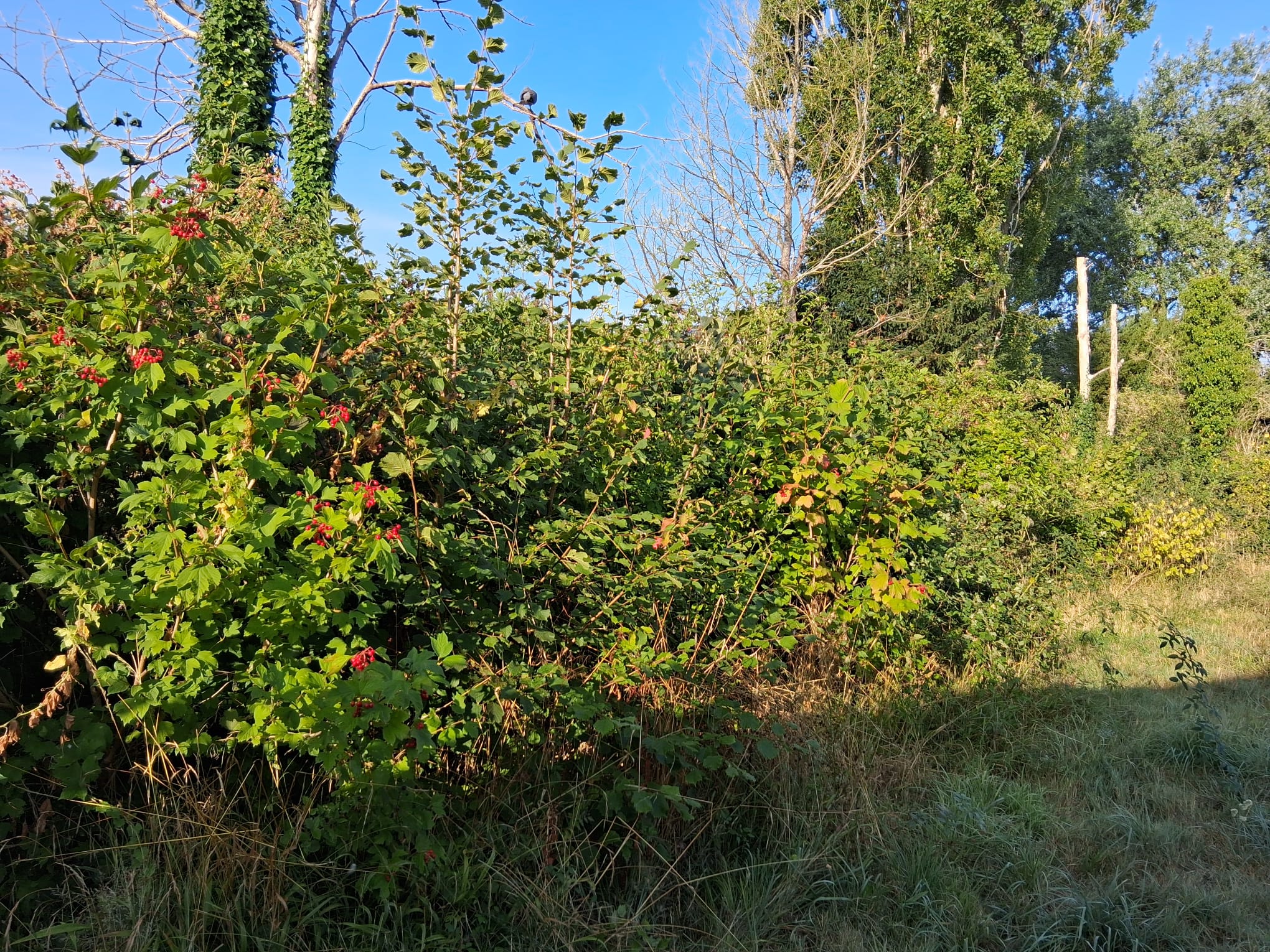
Garden Wedge After
Maintenance
The hope remains that, once fully established, this area will require minimal maintenance, but initially it obviously needed some TLC:
- Water young plants during hot, dry periods for 1-2 years.
- Remove vigorous self-seeders selectively for the first few years.
- Now the wedge requires only occasional summer and winter tidy-ups.
Additional actions:
- Adjacent grassland management: Strim twice a year, in June or July and again in August or September, leaving valuable native plants such as cow parsley in the first cut and knapweed in the second. All cut material is removed to reduce nutrient levels, discourage coarse grasses, and encourage a richer mix of wildflowers.
- Specific species enhancements: A hedgehog hibernation house was installed in Autumn 2024 to provide safe overwintering habitat.
Results:
After five growing seasons, the wedge in particular has thickened into a substantial linear wildlife corridor.
Pond Renovation
What we did:
- Removed the failed liner and mud, carefully relocating 21 overwintering newts.
- Built a wildlife-friendly pond with shallow edges for easy access and a deeper central refuge.
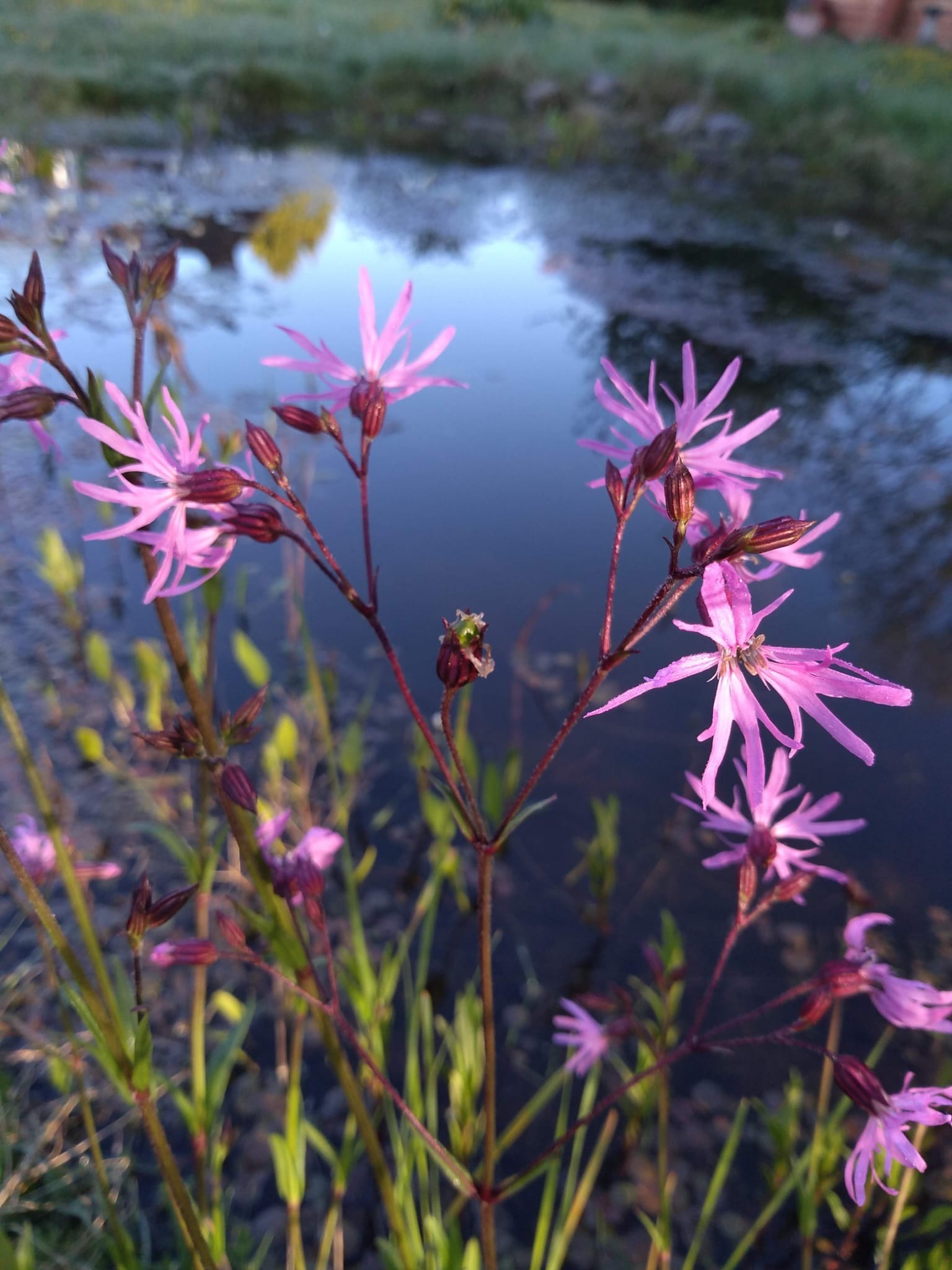
- Used a sand substrate to keep nutrient levels low, and planted native bankside, marginal, and aquatic plants, plus a few non-native irises for cover.
- The surrounding turf was lifted and the liner extended onto the exposed soil before replacing the turf, creating a ‘draw down’ zone that mimics seasonal water fluctuations while hiding the liner.
- No fish were added, protecting amphibians and invertebrates.
Why it matters:
Including a water body in the garden, whatever its size, is widely recognised as one of the most valuable ways to support wildlife. Although the old pond needed complete re-profiling and re-lining, restoring it was an easy decision based on the benefits it could bring. Using sand as the substrate created a relatively nutrient-poor aquatic environment from the outset, helping native plants establish and reducing the risk of excessive algal growth.
Maintenance:
- Remove invasive species such as willow seedlings, bramble, and hemp agrimony.
- Top up water in dry periods to protect eggs, larvae, and plants.
- Monitor the number of ducks, which can disturb vegetation and wildlife.
Additional actions:
- Begin recording species observed, starting with dragonflies and damselflies.
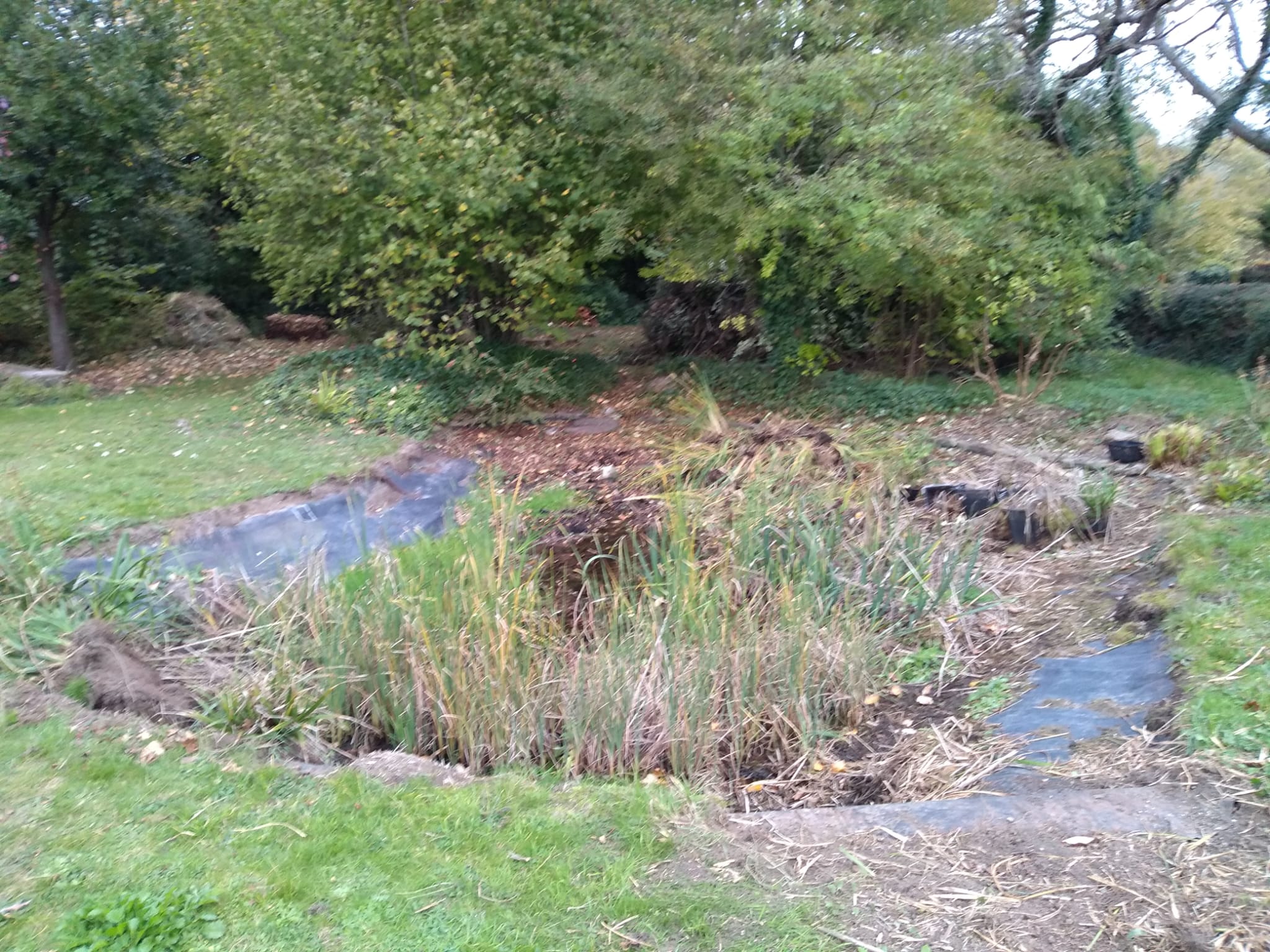
Pond Before
Pond After
Results:
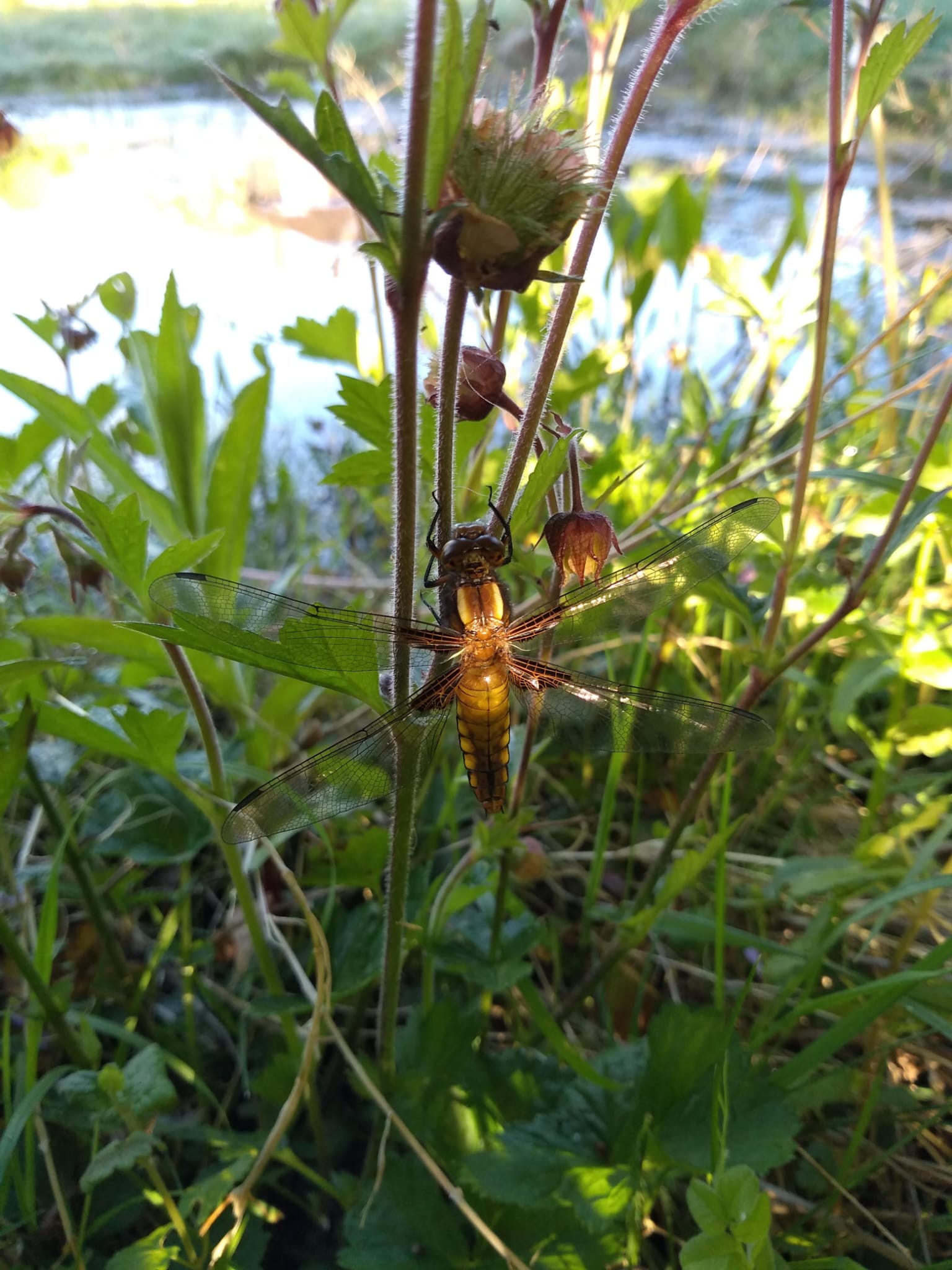
Newts returned immediately, along with dragonflies and damselflies, including broad-bodied chasers, southern hawkers, common darters, and several damselfly species, all of which have since bred successfully. There is also a good range of aquatic larvae, including caddis flies, as well as beetles and small pond snails. Furthermore, aquatic vegetation has thrived and water clarity remained good, creating a balanced, naturalised habitat.
Take simple steps now to support wildlife in your garden or community greenspaces by looking at the Actions for Nature tool in our Members area, including:
- Plant trees
- Wildlife pond
- Natural food sources for birds
- Grow plants and flowers for pollinators and other invertebrates
- Homes for hedgehogs
- Leave areas of grass uncut